China & the world: new leadership, partnerships, investments, SWFs

I am writing this post on board Cathay Pacific 830 from HK to NY en route to Sao Paulo, following two weeks of off the record discussions with CEOs, institutions, and government officials in Asia.

20121116-164849.jpg

(Quick side note, Marester, the Filippina cabin chief and her team, yet again sets a high benchmark for global customer service. Cathay easily has the most in-depth data and understanding of its clients to make them feel welcome and personally attended to – they actually make me look forward to flying despite fifteen years of constant global travel. Chapeau bas and good luck to the competition).

While many people in Asia focused more on the US elections than the leadership transition in China, the conclusion of the 18th Party Congress, its leadership transition, and the 12th five year plan have profound implications for the world overall and global investment management in particular.

The new leadership in China:

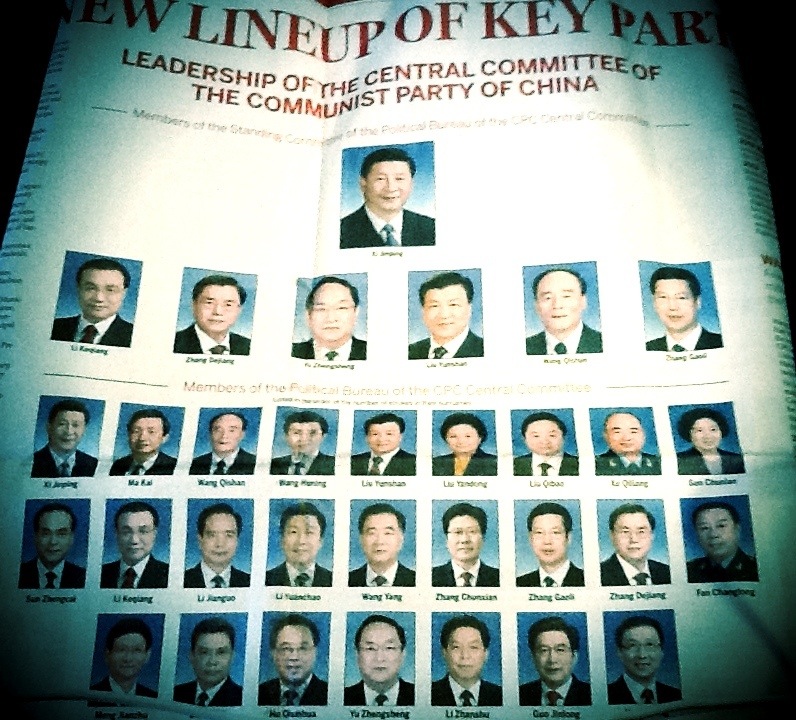
There are high expectations for Xi Jinping as he takes over as both general secretary of the Central Committee of the CPC and chairman of the central military commission (there was much speculation about whether Hu Jintao would continue as CMC head similar to Jiang Zemin), giving him a strong mandate of change for the country.
20121116-153921.jpg

The other six members of the Standing Committee of the Political Bureau, elected at the first plenum following the 18th National Congress, are:

– Li Keqiang
– Zhang Dejiang
– Yu Zhengsheng
– Liu Yunshan
– Wang Qishan – secretary of the Central Commission for Discipline Inspection.
– Zhang Gaoli

Notably, both Xi and Li were born after the founding of the PRC in ’49. Xi in his official address juxtaposed “world-renowned achievements” and “every reason to take pride” with “many pressing problems within the Party … , particularly corruption, taking bribes, being divorced from the people, going through formalities and bureaucracy caused by some” to “ensure that our Party will remain at the core of leadership in advancing the cause of socialism with Chinese characteristics.”

Investing in China

Jim O’Neill sees China slowing down from 10% real GDP growth to 7% with a focus from quantity of growth to quality of grow, but still the best BRIC investment. A big part of that quality will be the shift from an export led to a consumer led economy centered around domestic consumption.

For many, capital market, currency and banking reforms are at the core of China’s challenges, overall tied to larger social issues around the quality of life.

20121116-162238.jpg

As an example, non performing loans (NPL) among Chinese banks have increased for four consecutive quarters, the most pronounced decline in asset quality in almost a decade. The CBRC this month reported RMB 22 billion in Q3/2012, to RMB 480 billion. Overall, CBRC chair Shang Fulin reported at the 18th party congress that the NPL to total loans with 1% stands at a low level.
20121116-165134.jpg

On the other hand, state-owned enterprises have increasingly been going global. Overseas investments through August have reached $53 billion, already almost matching the full year total of $60 billion in 2011. The chair of the state-owned assets regulator, Wang Yong, at the congress spoke about the need to look for global business opportunities in a variety of industries. For instance, ICBC chairman Jiang Jianqing stated that his firm had earned almost $900 million from overseas operations in the first half of this year.

The prospects for QFII and RQFII as quotas increase

And CSRC chairman Guo Shuqing during the party congress stated that the commission will continue to enlarge the quota for foreign investors to stabilize the securities market and expand investments into China, partially by making application standards for foreign firms easier.

20121116-165323.jpg

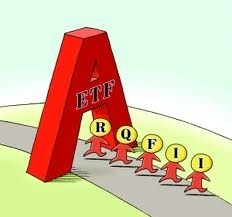
QFII, launched ten years ago to allow foreign brokerage, investment and trust houses to invest in China’s capital markets, especially via A shares. The CSRC increased the quota from $30 billion to $80 billion, but demand is higher still and Guo is looking to offer preferential tax policy in line with international standards for QFII.

In addition, the commission has agreed in principle to again increase the pilot RQFII (yuan QFII) program to satisfy demand. RQFII was launched last December to offer financing channels for international RMB funds to invest in the mainland securities market. The initial quota of RMB 20 billion was increased to RMB 70 billion in April, and the CSRC now in principle has ok’d a further dramatic increase to RMB 270 billion.
20121116-165557.jpg

20121116-165656.jpg

According to SAFE (the state administration of foreign exchange), at the end of the third quarter there were:

– 157 funds with almost $31billion in QFII
– 21 financial institutions with almost RMB 40 billion in RQFII

Guo during the party congress expressed his confidence in the mainland securities market, despite the last few turbulent months. Guo Jianwei, deputy director general of the PBC recently called on Chinese banks to follow a “going global strategy“.

An era of partnerships, increasingly with emerging market bridges.

In one of my books written for Strategic Insight, “Building Bridges”, I explored the growing trend for emerging fast growing regions such as Asia, Latin America and MENA to work together without going through Europe or the US.

The case studies in the book include for instance the 75% of offshore allocations by Chilean institutional investors to Asia-Pacific investment products, the $250 billion of Brazilian high yield fixed income products in Japan, over a third of Fidelity’s SE Asia flagship assets coming from Latin investors and the focus for Compass group on raising awareness for the Andean Three amongst Asian asset holders.

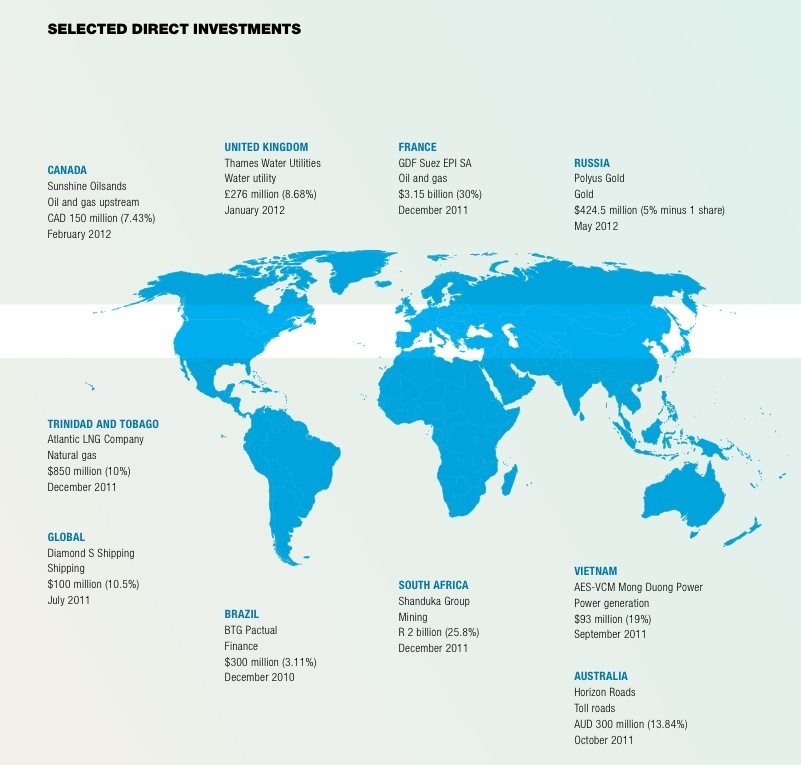
My recent review of sovereign wealth investing featured CIC’s direct investments in BTG Pactual in Brazil and Shanduka in Africa, as well as the new joint asset management venture between Qatar and Credit Suisse.

And if we look at global cash flow patters year to date with Strategic Insight data, Japan and China locally have raised inflows to equity vehicles, thematic in Japan and with innovative ETF structures in China.

20121116-170527.jpg

Again, for China the theme of partnership is dominant – the top cash flow fund in Asia locally ytd is the JV between Huatai and PineBridge, with the CSI 300 ETF.

A few years back I had the pleasure of participating in a China/US discussion on competition and collaboration, with John Kerry talking about the US government’s views and me talking about global asset management to an audience of Chinese asset management CEOs and US institutional investors.

20121116-170612.jpg

And today, the collaborative aspects and the strategic importance of China and Asia cannot be overstated. As I am flying back to NY, President Obama is on his way to the East Asia Summit of the ASEAN, following Hillary Clinton’s recent Foreign Policy position paper and her view that the 21st century will be “written in Asia”.

I invite you to follow me on twitter @danenskat

(c) Enskat Associates 2012

Posted in alternatives, asia, books, cash flows, China, E&A, enskat associates, institutional investor, Latin America, multi-convergence, professional fund buyers, SWFs, wealth management | Tagged , , , , , , , , , , , , , , , , | Leave a comment

Earnings season: Carlyle Group acquires asset manager, raises 3.4b in fresh capital

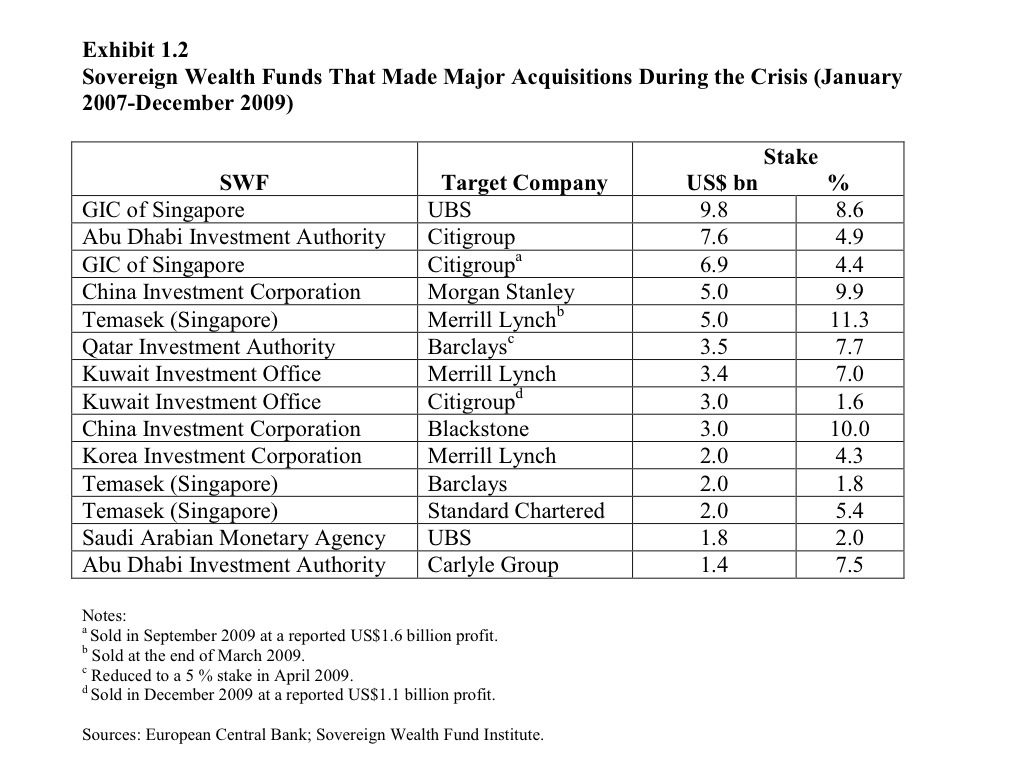
As mentioned in my recent postings on institutional investors, SWFs have increased their interest and stakes in private equity firms in the crisis. CIC took a 10% stake in Blackstone, ADIA acquired 7.5% in the Carlyle Group.

Among the highlights from the Carlyle Group for the third quarter:

20121110-091718.jpg

– $5.1 billion of carry fund realizations in Q3 2012, with $11.9 billion in realized proceeds year to date

– $3.4 billion in new capital raised during the quarter, $9.4 billion year to date 2012. At the same time, $1.6 billion in carry fund equity were invested in Q3. $4 billion in the pipeline for transactions expected to close in the next few quarters.

– lastly, U.S. GAAP net income attributable to the Carlyle Group L.P. stood at $19 million, or $0.40 per common unit on a fully diluted basis for Q3.

David Rubenstein attributed the $3.4 billion in fresh capital to investor confidence in the firm’s global alternative model and the recent performance.

20121110-091750.jpg

Interestingly, William Conway aside from the US and Europe, cited especially emerging markets, “from Brazil to Turkey to China are great places to invest right now.” For Q3 2012, total revenue was $859 million, compared with revenue of $(60) million last year. Total balance sheet assets were $30 billion as of September 30, 2012 compared with $24.7 billion in 2011.

Carlyle evaluates business performance on four metrics, known as ” the Carlyle engine”: funds raised, equity invested, fund valuations and realized proceeds for fund investors, a shown below.

20121110-091219.jpg

During Q3, Carlyle generated net realized proceeds of over $5 billion from 117 different investments across 34 carry funds. The firm deployed $1.6 billion of equity in 86 new or secondary investments across 24 funds. In addition, Carlyle committed to invest $4 billion in equity across 10 transactions that were announced in Q3, expected to close in coming quarters. Below is a breakdown of these investments, with a majority of gains from corporate private equity.

20121110-091453.jpg

Realized performance fees reached $156 million, up by 106% quarter on quarter. For the current quarter, Carlyle’s revenues were positively impacted by public equity exits in China Pacific Life, Kinder Morgan, Dunkin Brands, and SS&C, as well as multiple private company sales.

20121110-092149.jpg

Over the last twelve months, net performance fees approached $600 million, up 7% from the prior 12-month period.

Economic net income of $220 million was positively impacted in Q3 by 3% appreciation in Carlyle’s carry fund portfolio, excluding structured credit, hedge funds and Fund of Funds Solutions vehicles. The fund appreciation was driven by increases in Buyout, Real Estate and Global Market Strategies carry funds, offset by a decline in Energy funds, and flat performance in Growth funds.

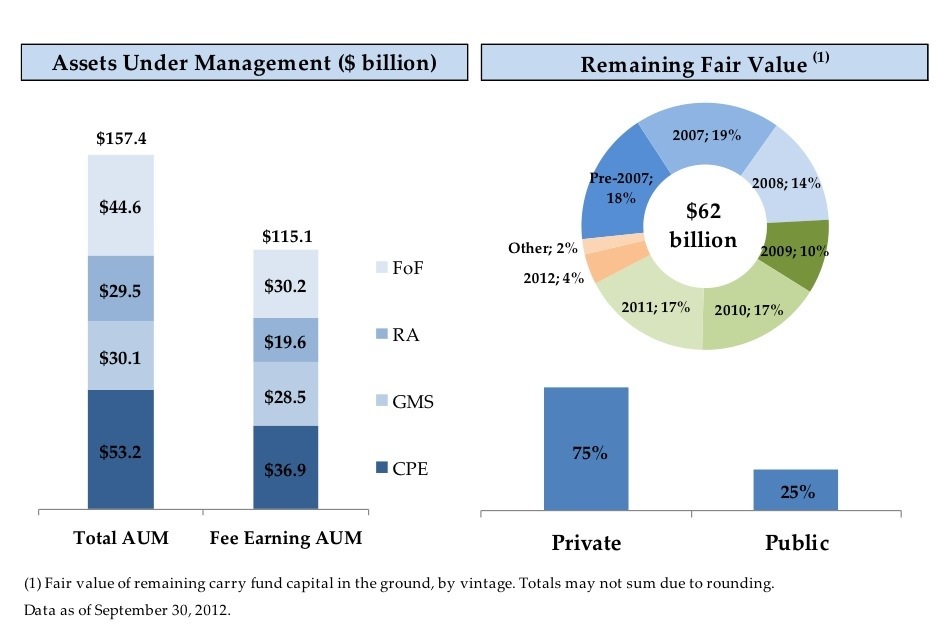
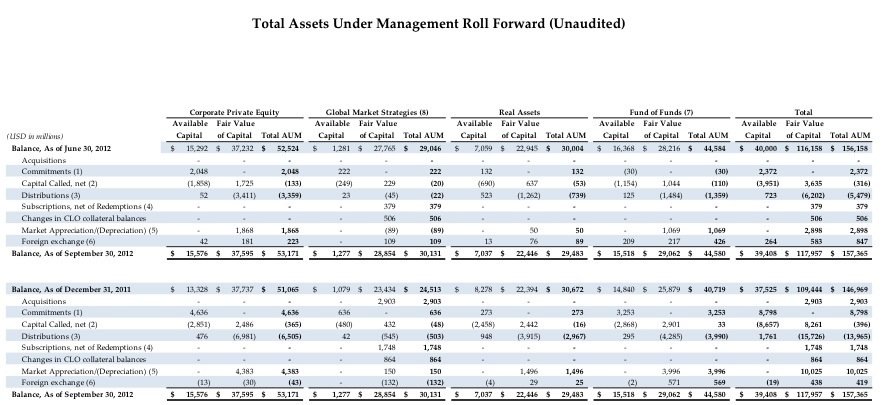
Total assets for the group approached $160 billion. Increases versus year-end 2011 were primarily due to fundraising, portfolio appreciation, increases in Global Market Strategies due to CLO creation, new carry funds, and acquisitions. Total dry powder of almost $40 billion includes Corporate Private Equity ($15.6 billion), Global Market Strategies ($1.3 billion), Real Assets ($7.0 billion), and Fund of Funds Solutions ($15.5 billion).

20121110-092751.jpg

Fee-Earning AUM for Carlyle stands at $115 billion. Among the quarter on quarter changes were fee earning asset inflows (+$3.8 billion), foreign exchange impact (+$679 million), hedge fund net subscriptions (+$407 million), change in the par value of CLO collateral (+$171 million), and net distributions and outflows (-$1.7 billion). Carlyle Partners VI will not increase Fee-Earning AUM until the predecessor fund (Carlyle Partners V) is substantially invested, which is expected to occur in the first half of 2013.

For corporate private equity, assets stood at $53.2 billion, up slightly by 1%. Fee earning AUM of $36.9 billion was flat quarter on quarter. Funds raised of $2.0 billion was driven by the second closing of Carlyle Partners VI, as well as closings in the U.S. mid-market buyout fund and various co-investments. Year-to-date, funds raised of $4.8 billion compare to $1.3 billion for the same period in 2011.

Assets for global market strategies reached $30 billion, up 4%, while Fee-Earning AUM of $28.5 billion increased 3% compared to Q2 2012. Hedge fund net inflows were strong at $379 million in Q3 2012 and $1.7 billion in year-to-date net subscriptions, resulting in total hedge fund AUM of $9.8 billion. Specifically, a third new Collateralized Loan Obligation (CLO) raised $615 million in assets. GMS Carry fund AUM ended the quarter at $3.5 billion, total structured credit AUM ended the quarter at $16.9 billion.

20121110-093429.jpg

In October Carlyle acquired a 55% ownership position in Vermillion Asset Management, a commodities focused investment manager with $2.2 billion in assets – reflected in Q4 results.

For real assets, total AUM is $30 billion, down 2% versus Q2 2012 due to distributions of $1.3 billion and flat carry fund performance. Fee-Earning AUM of $19.6 billion was largely flat versus Q2 2012.

Assets for FOF solutions were flat $45 billion, but Fee-Earning AUM of $30 billion increased 9% versus Q2 2012. Those gains were due to the initiation of fees on several 2012 mandates that made their first investment during the quarter and began charging fees on total investor commitments.

20121110-094024.jpg

I invite you to follow me on twitter @danenskat

(c) Enskat Associates 2012

Posted in alternatives, beauty, black swans, cash flows, China, Enskat Associates, information delivery, Latin America, management, Middle East, multi-convergence, private banking, professional fund buyers, SWFs, UCITS, Uncategorized, wealth management | Tagged , , , , , , , , , , , , , , , | Leave a comment

Earnings season: Goldman Sachs with 850b in investment mgmt assets and 8b in net revenues

Leaving aside that Goldman got in trouble for preparing for trouble in the aftermath of Sandy, the firm reported strong quarterly results. 850+ billion in investment management assets, over $8 billion in net revenues, with over $4 billion in institutional client services revenues.

20121110-140143.jpg

The Goldman Sachs Group reported net revenues of $8.4 billion and net earnings of $1.5 billion for the third quarter. GS ranked first in worldwide announced and completed M&A year-to-date, as well as in worldwide equity and equity-related offerings. Goldman’s global core excess liquidity was $170 billion as of September 30, 2012; its Tier 1 capital ratio under Basel 1 was 15%, Tier 1 common ratio was 13.1%.

20121110-142240.jpg

Net revenues in Investment Banking were $1.2 billion, 49% higher than last year, but 3% lower than last quarter. Financial Advisory stood at $0.5 billion, slightly lower compared to Q3 2011. Underwriting, however, more than doubled year on year to $0.7 billion, due to higher net revenues from leveraged finance activity.

Net revenues in Institutional Client Services were $4.2 billion, 3% higher than the third quarter of 2011 and 8% higher than the second quarter of 2012. Fixed Income, Currency and Commodities Client Execution brought in $2.2 billion, almost a third more than last year, with strong gains for mortgages and higher net revenues in credit products, currencies and interest rate products, partially offset by significantly lower net revenues in commodities. During the third quarter of 2012, Fixed Income, Currency and Commodities Client Execution operated in an environment generally characterized by tighter credit spreads, as certain central banks took steps to ease monetary policy; however, broad market concerns persisted and levels of activity generally remained low.

Net revenues in Equities was $2 billion, 16% lower than last year, primarily due to significantly lower commissions and fees, reflecting lower market volumes, and lower net revenues in equities client execution. In addition, net revenues in securities services were slightly lower compared with the third quarter of 2011, reflecting the impact of lower average customer balances.

During the quarter, Equities operated in an environment generally characterized by an increase in global equity prices and lower volatility levels.

Net revenues in Investment Management were $1.2 billion, 2% lower than Q3/2011 and 10% lower quarter on quarter. The decrease in net revenues compared with the third quarter of 2011 reflected lower transaction revenues and slightly lower management and other fees, partially offset by higher incentive fees.

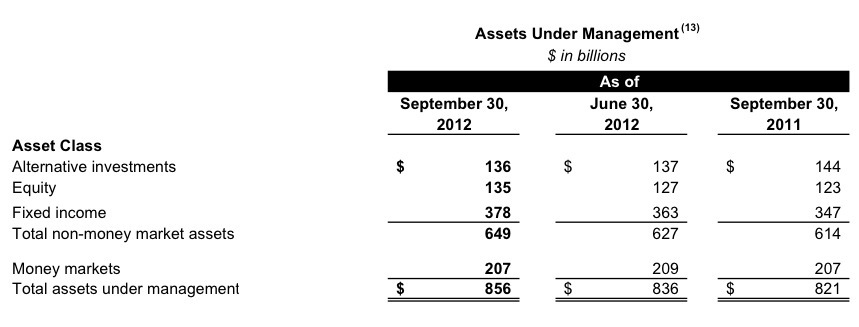
During the quarter, assets under management increased $20 billion to $856 billion, reflecting net market appreciation.

20121110-141651.jpg

Let’s take a closer look at the composition of the $850+ billion in AUM: not surprisingly, fixed income assets are now the largest asset class, with $380 billion. Notably, alternative assets ever so slightly surpassed equities, $136 billion vs. $135 billion, a reflection of the increasing focus for institutional clients on alternative solutions.

I invite you to follow me on twitter @danenskat

(c) Enskat Associates 2012

Posted in alternatives, black swans, cash flows, consulting, distribution, E&A, enskat associates, institutions, investment banking, Middle East, multi-convergence, private banking, private equity, professional fund buyers | Tagged , , , , , , , , , , | Leave a comment

Multi-Convergence: Credit Suisse and Qatar SWF create asset mgmt JV

My recent post about CIC showcased how more SWFs – and institutional asset holders overall – are investing directly in specific businesses or partner up with them to launch products. And, as shown below, they do like financial services firms.

20121108-085324.jpg

20121108-085237.jpg

Qatar earlier this year co-invested $250 million into a natural resources PE fund with Barclays, but now the SWF is taking it a step further with Credit Suisse: the two firms are creating an asset management joint venture in 2013. As SWFs are trying to diversify their assets, it makes sense to go down the road of holistic partnerships, which provides greater mutual benefits, transparency and alignment of interests.

20121108-085103.jpg

Qatar already is the second largest stakeholder in Credit Suisse, with 6%+, and with Qatar’s drive to make Doha a regional hub, the new venture – called Aventicum Capital Management – will focus on EM and frontier investments.

20121108-085130.jpg

Aventicum will be run by Aladdin Hangari and Martin Keller, with Hashem Montasser, previously the asset management head of EFG Hermes, as CEO. Egypt’s EFG Hermes, of course, is creating another JV with Qatar, this one on the investment banking side with QInvest, who will hold 60% of the JV after investing $250 million.

20121108-085209.jpg

Welcome to a whole new era of multi-convergence and strategic partnerships.

20121108-085442.jpg

I invite you to follow me on twitter @danenskat

(c) Enskat Associates 2012

Posted in alternatives, apps, beauty, black swans, Brand, cash flows, China, EFAMA, Enskat Associates, information delivery, institutions, Latin America, Middle East, multi-convergence, private banking, professional fund buyers, SWFs, wealth management | Tagged , , , , , , , , , , , , | Leave a comment

Institutional investors: SWFs in the spotlight – CIC… LatAm, Africa and Alternatives

China at the 18th Party Congress starting this week is electing a new leader – a busy year of change for China and the world. On the investment side, CIC with now some $485 billion in AUM similarly is undergoing tremendous changes since its pre-crisis launch in 2007.

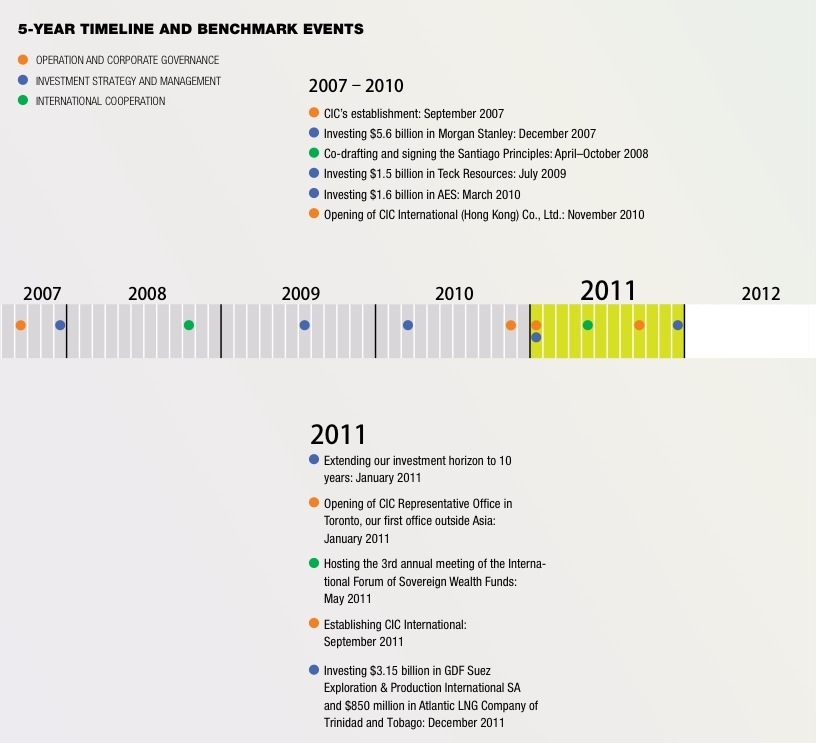
CIC in the downturn increased the flexibility of the portfolio while also changing the asset allocation framework post-crisis. In 2011, the board extended the investment horizon to ten years as part of its long-term investment approach.

Changes to asset allocation and risk management in this context included new positions in non public market assets, especially direct and private equity investments in energy, resources, real estate and infrastructure (with investments in of $5b in Morgan Stanley and $3b in Blackstone, as discussed here).

20121107-080747.jpg.

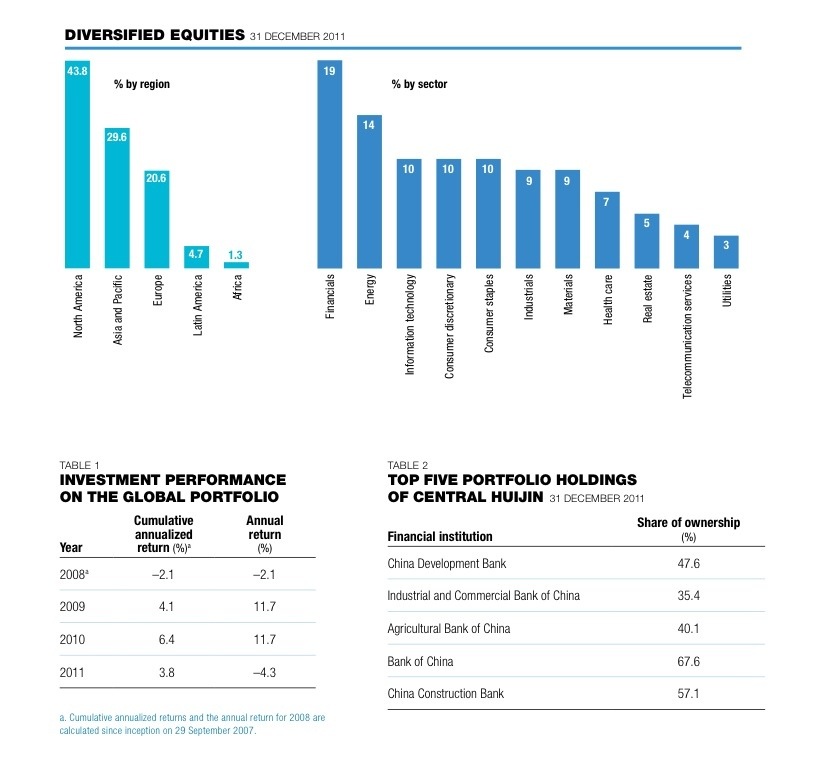
The second big focus area for chairman Lou Jiwei and the board was on the refinement and enhancement of the overall risk management systems. 2011 returns for the global investment portfolio were –4.3%, with the cumulative annualized return since inception at 3.8%.

20121107-081245.jpg

CIC’s mandate when it was established in September of 2007 was to invest a portion of China’s foreign reserves overseas, with the objective to maximize returns at a prudent level of risk. In December 2011, CIC received an additional $30 billion to enhance that role.

A big focus in 2012 was on overseas branches to improve the ability to manage worldwide investments, with senior management appointments in HK, further built out of the CIC rep office in Toronto for stakeholders in North America and more ties with business partners to create mutually beneficial investment opportunities.

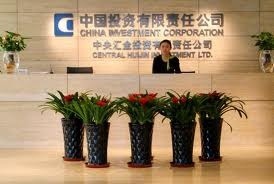
From an operational and investment perspective, CIC’s portfolio mostly contains financial products and direct investments, balanced between traditional and alternative vehicles. Central Huijin Investment Ltd. (Central Huijin), a wholly owned subsidiary of CIC but with completely separate operations, holds controlling stakes in key state-owned financial institutions in China, including recapitalization of selected domestic financial institutions.

CIC has an International Advisory Council of 15 internationally prominent experts, who provide global views on global economic, investment and regulatory issues. Their discussions and counsel broaden the perspective of CIC’s leadership and efforts to expand overseas investments. In July 2011, the International Advisory Council met for its third annual meeting in Guiyang, Guizhou Province.

The board of directors in addition to the CEO and President includes the deputy ministers of finance and commerce, the deputy governor of the people’s bank of China and the deputy administrator of SAFE. The supervisory board includes the vice chairmen of the CSRC and the CBRC. I will have a dinner discussion with the former next week alongside all key China asset managers.

20121107-083419.jpg

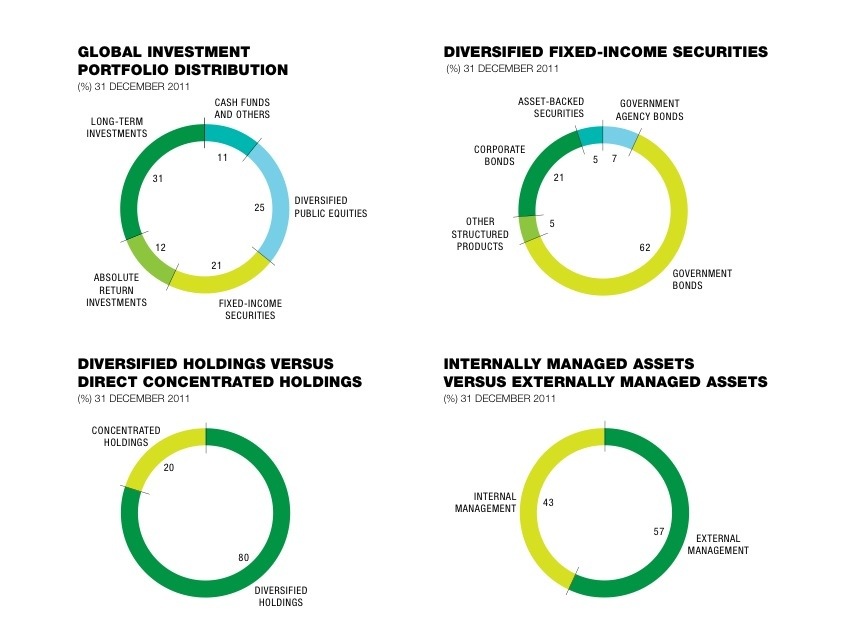
CIC’s Strategic Asset Allocation has five asset classes: cash, equities, fixed income, absolute return investments and long-term investments.

– Absolute return investments are primarily hedge funds.

– Long-term investments are primarily private equity investments in resources, energy, real estate and infrastructure, and direct investments in other industries.

– In public market asset positions, CIC is overweight on index and index-enhanced funds.

20121107-083457.jpg

I have written a lot about the emerging market investment bridges between Asia and Latin America. And indeed, on the direct investment side CIC invested $300 million into BTG Pactual in 2010. BTG, of course, recently acquired Chile’s Celfin to become a regional powerhouse and to provide institutional investment capabilities to asset owners globally. I will be on a panel on global expansion opportunities with BTG in São Paulo later this month.

20121107-084837.jpg

The second big focus globally for selected institutional investors is on Africa. Last December, CIC acquired a 25.8% shareholding in Shanduka Group for R 2 billion ($247 million), marking its foray into Africa. Shanduka Group is an investment holding company in South Africa, with businesses covering mining, finance and consumer goods. As the second biggest shareholder, CIC will leverage Shanduka to expand investments in Africa.

20121107-084947.jpg

Lastly on the global front, CIC in mid 2011 set up the Russia-China Investment Fund with Vnesheconombank (VEB), Russia’s state development bank, and the Russia Direct Investment Fund (RDIF). CIC also launched the China Belgium Mirror Fund with Belgian Federal Holding and Investment Company (SFPI) and A Capital. In October 2011, CIC, VEB and RDIF signed a Memorandum of Understanding to establish the Russia-China Investment Fund. The Memorandum of Understanding set the fund at $4billion, with $1 billion committed by CIC and our related parties, and another $1 billion by RDIF and related parties. The fund will raise the remaining $2 billion from third-party international investors.

20121107-085718.jpg

Also in October 2011, CIC, SFPI and A Capital signed a nonbinding letter of intent to launch the China Belgium Mirror Fund. The letter specified that SFPI and CIC will each commit €8.5 million as limited partners and cornerstone investors, with A Capital as the general partner. The fund will raise additional funds from third parties and invest in companies in Belgium and broader Europe. In April 2012, CIC’s Investment Committee officially approved CIC’s investment commitment for the fund.

In May 2011, CIC reorganized its investment departments to promote greater synergy and efficiency across departments, focusing on deeper sectorexpertise within each department. CIC engages external investment managers across all asset classes wherever appropriate.

• The Department of Asset Allocation and Strategic Research develops and adjusts strategic and tactical asset allocation plans, manages overall investment objectives and formulates alternative and passive asset investment strategies.

• The Department of Public Equity implements active strategies by using external fund managers and conducting its own proprietary trading.

• The Department of Fixed Income and Absolute Return manages all fixed- income portfolios as well as credit derivatives, hedge funds and multiasset and commodity portfolios.

• The Department of Private Equity focuses on real estate, industries, science and technology, financial services, consumer goods and services, health care and biopharmaceuticals.

• The Department of Special Investment manages and executes investments in resources, energy, infrastructure, agriculture, precious metals and other sectors with concentrated positions.

CIC’s investible capital was fully deployed in 2011. Overall, the bond and credit product portfolio outperformed stock holdings and generated relatively good returns. In 2011, CIC built up the long-term asset portfolio and weighted it toward long-term assets.

20121107-085946.jpg

It steadily increased positions in private equity investments across various industries, especially those in emerging markets. CIC also diversified through direct or coinvestments. Here, the focus was on direct investments in oil and gas, mining and infrastructure to gear investments toward lower risk assets, such as steady return assets and resource- related assets.

The portfolio was primarily impacted by the fact that many of CIC’s private equity investments in funds or projects are still at the investment stage, along with losses of portfolio companies in energy and resources.

20121107-090017.jpg

Notably, above we see that 57% of CIC’s portfolio is managed externally, with 80% of holdings in diversified solutions. On fixed income, corporate bonds have increased to now 21%, with absolute return solutions on the global portfolio accounting for 12%.

On risk management, CIC conducted stress tests under varied scenarios and closely monitored portfolio risks through an improved early warning system. This included a new information technology platform adopting a “classification, prioritization and modularization” management model.

All of CIC’s management activities are integrated on one information technology platform, incorporating 21 first-priority processes and 121 second-priority processes. It contains a “three lines of defense” approach, with each department as the first line of defense, responsible for hands-on and timely monitoring of its own risk and internal control processes. The Internal Control Team in the Department of Risk Management is the second line of defense, responsible for reviewing and examining internal control status across departments. The Department of Internal Audit and Department of Institutional Integrity is the third line of defense, responsible for auditing, supervising and evaluating companywide internal control management.

Looking ahead, risk management efforts are concentrated in four areas:

• Gearing the investment philosophy toward the medium and long term, based on a 10 year horizon. With no imminent pressure for short-term cash outflows, CIC wants to go beyond short-term volatility and liquidity risks to capture countercyclical investment opportunities and illiquidity premia.

• Strengthening research capabilities to build an early warning risk system, by integrating asset allocation, investment management and risk management.

• Enhancing the disciplinary and execution power of risk management and strengthening the risk management framework by enhancing execution and coverage.

• Aiming to lower the overall operational risk. To do this, CIC is promoting compliance awareness among staff, increasing interdepartmental cooperation by clarifying departmental responsibilities and integrating internal control and operational risk management functions.

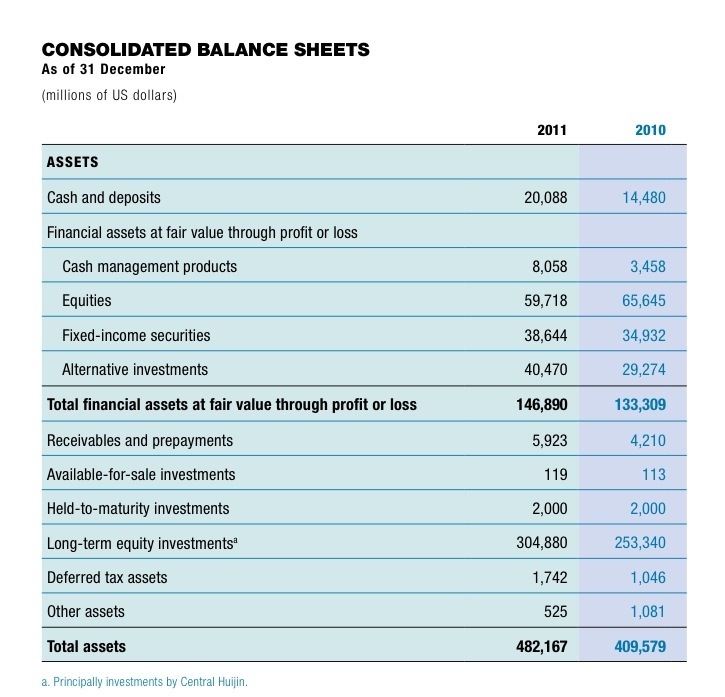
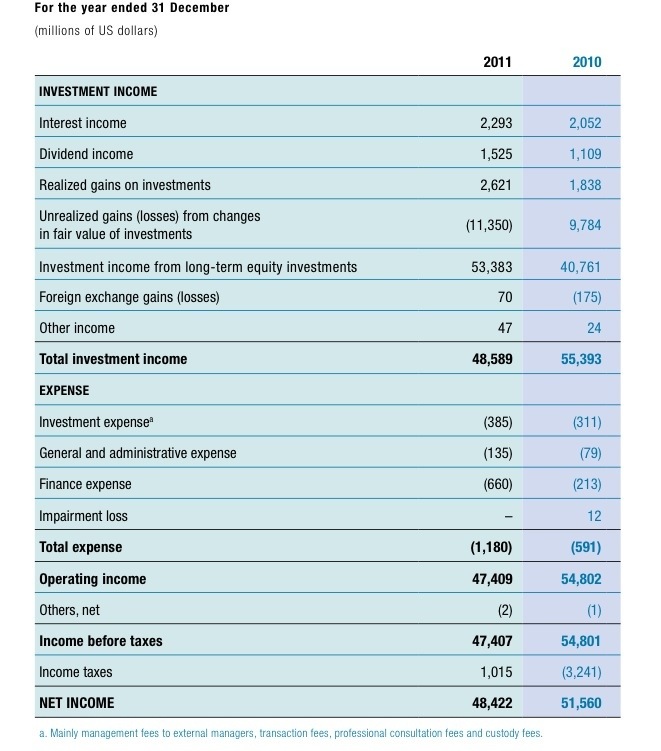
Now let’s get to the meat – total assets for CIC rose to $482 billion in 2011, up from $410 billion in 2010.

Equity assets with $60 billion lead the way for financial assets, followed by alternatives at $41 billion.

20121107-091038.jpg

Despite the ability of Asian institutional investors to keep fees at low levels, the investment expense grew from $311 million to $385 million, with overall investment income at $49 billion, down from $55 billion in 2010.

20121107-091500.jpg

I invite you to follow me on twitter @danenskat

(c) Enskat Associates 2012

Posted in alternatives, beauty, black swans, Brand, Brazil, cash flows, Chile, China, Enskat Associates, information delivery, LatAm, Latin America, management, multi-convergence, private banking, regulation, SWFs, UCITS, wealth management | Tagged , , , , , , , , , , , , , , , , , , | Leave a comment

After #Sandy: Speeches and meetings in Asia and Latin America

After a week without power or water, thanks to Sandy, I am about to fly over to Asia for two weeks, followed by a week in Latin America later in November.

The week here showed NY and the world how little we can do when nature decides to strike. But as after the last blackout a decade ago and 9/11, it is remarkable to see how NY reacts when disaster strikes – pushing forward stoically, helping each other and seeing the bright side.

20121104-142228.jpg

I received dozens of texts from friends and clients in the city offering their homes, offices and hospitality while downtown was pitch black. And, interestingly, the all important meetings for the week weren’t all important after all.

The storm is estimated to cost over $50 billion, but NY is back on its feet.

Tomorrow I am off to a two week Asia tour. It has been a few months since my last trip and, given the many important product and distribution trends for HNW investors and institutions, I look forward to getting an update from clients, with a CEO luncheon this Friday hosted by Asset International’s CEO, followed by a number of speeches at conferences, for China, the region, and SWFs, among others.

20121104-143331.jpg

SWFs especially in Asia and Latin America have been taking over, both in regard to AUM and new funds launched.

20121104-143502.jpg

But it’s not only that SWFs and other institutional investors have accounted for the majority of investments post 2008, they are also becoming much more active – and actively involved.

20121104-143848.jpg

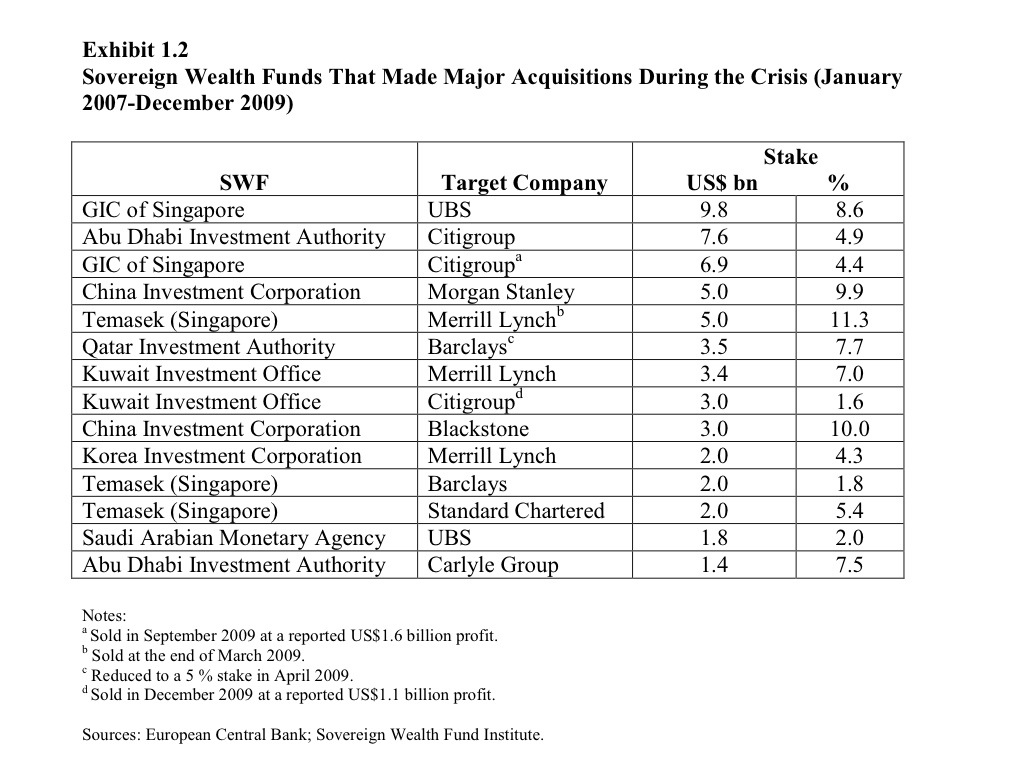
As shown above, GIC put money into UBS and Citi, CIC invested in Morgan Stanley and Blackstone, and Temasek went into Merrill. Interestingly, CIC and RDIF (Russia’s direct investment fund) this summer launched a Russia-China Investment fund as a limited partnership on a commercial basis. The fund aims to raise $2-4 billion, with $1 billion committed by CIC and its related parties, and another $1 billion by RDIF, seeking to raise an additional $1-2 billion from third-party international investors.

I will share with you updates from my discussions later in the month.

Then it’s off to Brazil and Latin America late in November, for keynote speeches and meetings with clients and institutions. With the Selic rate at 7.25% and Latin corporate bond issuance at an all time record of $70 billion so far this year, this promises to be an extraordinary trip.

Two months ago I had discussions with all major LatAm SWFs and institutional investors at a conference in NY, mostly focusing on portfolio construction and asset allocation. This time around the talks will be more around the opportunities in the current environment for the region at large.

20121104-143009.jpg

As many of you remember, Petrobras via PifCo early in 2012 raised $7 billion for notes due in 2015 and 2017 in a single day, with demand surpassing $25 billion as a result of more than 1,600 orders placed by more than 700 investors. It was the largest ever Brazilian international bond offering and the lowest cost for a 30-year term for a Brazilian Company, with the final allocation concentrated mostly in the United States (58.4%), Europe (28.1%) and Asia.

Emerging fast-growing regions are building direct bridges fast, but for now US and European managers have competitive advantages that benefit their net cash flow picture. Still, it is not a one way street anymore and firms like Principal with over half a dozen acquisitions in the last two years in Latin America, is seeing the shifting tectonic plates.

Where is the industry going to grow? US/Europe vs Asia/Latam

Learning from Chile: Principal buys AFP, the growth of Latin America retirement investing and Chile educating the US

I invite you to follow me on twitter @danenskat

(c) Enskat Associates 2012
Posted in alternatives, asia, beauty, black swans, books, Brand, Brazil, cash flows, Chile, China, consulting, EFAMA, Enskat, Enskat Associates, information delivery, LatAm, Latin America, management, money, multi-convergence, pension funds, private banking, professional fund buyers, SWFs, wealth management | Tagged , , , , , , , , , , , , , , , , , , , , , , , | Leave a comment

Gender and race inequalities in retirement savings – changing the future

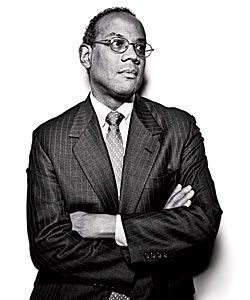
John Rogers is an icon not only in finance, but also in education. Thirty years ago he founded Ariel Investments, changing finance in the process (he today is an advisor and on boards of many of the most prestigious companies, endowments and universities).

20121103-102614.jpg

However, more importantly, as far as I am concerned, twenty years ago he founded the Ariel Foundation, “adopting” sixth grade students from the south side of Chicago with a promise to make college affordable for every student graduating from high school. The name later changed to the Ariel Education Initiative (AEI), and, jointly with Aon, Ariel publishes an annual retirement study focused on racial and gender analysis for retirement investing.

On the plus side, “401k Plans In Living Color” has immensely raised awareness in regard to gender and race inequalities when it comes to investing and access to quality resources. Still, a lot needs to be done beyond awareness, judging from the 2012 results.

Below are a few highlights – please share both the study and the findings widely within your teams, organizations, and beyond.

20121103-102442.jpg

This study was conducted by AEI and Aon Hewitt, along with the Joint Center for Political and Economic Studies and The Raben Group. The findings are based on year-end 2010 information from 60 of the largest U.S. organizations across a variety of industries and sectors. The data, collected and analyzed by Aon Hewitt, represent 2.4 million employees.

While the first landmark study from 2009 looked at pre-crisis data, the 2012 show the impact of the crisis on retirement savings at large. One of the continuously disconcerting findings from the annual study is that African Americans and Hispanics lag behind in retirement assets compared to Asian Americans and whites.

Two courses of action to address the gap between race and gender are to implement policies and practices to reduce the withdrawal of funds prior to retirement and design plans to magnify the positive impact of auto-enrollment.

The 2007 Ariel/Aon Hewitt Study found that in each of the four essential areas of building account balances—establishing an account, contributing funds, allocating money appropriately, and preserving account balances by refraining from borrowing or prematurely withdrawing—disparities exist by race and ethnicity.

The cumulative effect of these disparities was that African-Americans and Hispanics have significantly lower average account balances in their 401k accounts, even across groups with similar salaries and age brackets.

The crisis left particularly African-American and Hispanic employees in financial distress, with 60% cashing out their retirement account entirely after losing their jobs. While the liquidity of the accounts is attractive as a short term life boat, the long term results are disastrous and the government should modify regulations that help bridge short term relief without sacrificing the future.

On the plus side, more employers now force workers to opt out of DC plans instead of asking them to enroll when they start, boosting participation rates especially among young and low salary employees.

Auto enrollment nearly eliminated that racial gap in participation rates!

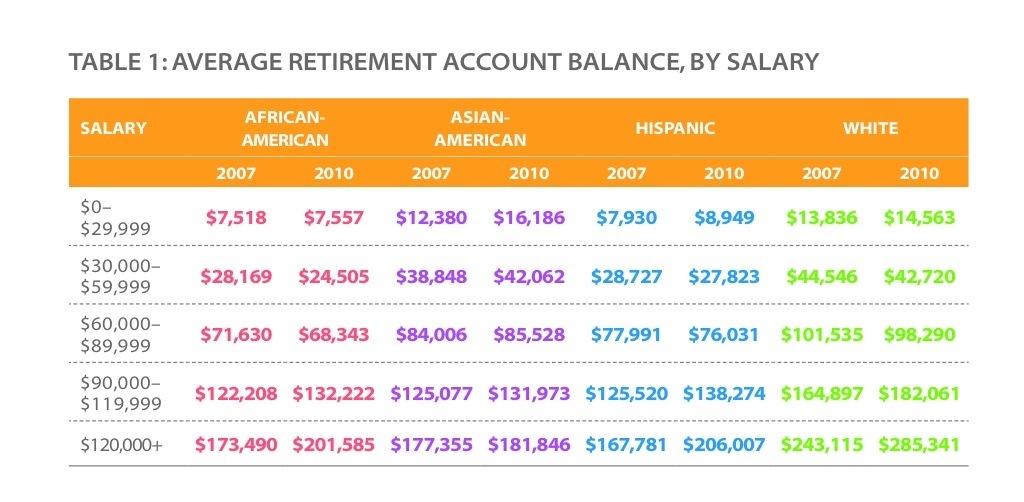
The most alarming data for me remains the average retirement account balance, especially for lower paid employees. Looking at the 30k-60k salary bracket, two sad statistics stand out.

– Account balances for Asian Americans and whites are over 60% higher than those of African Americans and Hispanics (42-43k vs. 25-28k)

– Account balances increased from 2007-2010 for Asian Americans and whites, but decreased for African Americans and Hispanics.

20121103-104207.jpg

The two main reasons for those data points are auto-enrollment and preventing DC account withdrawals in times of hardship by offering other solutions.

Let’s put things bluntly: the location of your birth, the color of your skin, and your gender are the main determinants of your success in life.

Being born white, male and in a “developed” country still gives you the most significant head-start in life imaginable. Yes, an increasing number of minorities and women are successful today (as chronicled in the larger number of powerful women in business and politics today), but they are successful against all odds, not because it is a level playing field.

John Rogers and his AEI play an important role in leveling this playing field. Let’s do our part by sharing relevant data points and policies to raise awareness further.

Hopefully this century will change things ever so slightly.

I invite you to follow me on twitter @danenskat

(c) Enskat Associates 2012

Posted in alternatives, black swans, Brand, cash flows, Enskat, Enskat Associates, India, information delivery, Latin America, multi-convergence, professional fund buyers, wealth management | Tagged , , , , , , , , , , , , , , , , , , , , , | Leave a comment

Global retirement themes: target returns, DB/DC, LDI, plan design, education, risk

As I am spending more and more time on the institutional side of the business in recent years – as part of the overall theme of multi-convergence in the industry -, I am always intrigued with the work done by Aon Hewitt.

20121102-150445.jpg

(Btw, they also have a great research app, “HRevolution”).

In their big picture annual “hot topics in retirement”, the group highlights important data points and client themes.

20121102-150847.jpg

Investments: on the investment side pension plans focus on investment advisory and income solutions. For DC plans, target optimization for investors alongside education and tools, often around plan design and automation tactics are on the forefront. For DB plans, risk and volatility management remains the overarching concern (see also my upcoming global analyst column in aiCIO on LDI and long duration bonds).

Operations: most institutional investors are conducting a review of funds and fees, with growing external support as part of restructuring and compliance.

Fundamentally, the biggest concerns for the industry are employee readiness for retirement as well as target policy return targets of around or above 8% and expectation management if those targets are becoming less and less realistic. Only 4% of plans are very confident their employees will retire with sufficient assets, down from 30% in 2011. Similarly, only 10% of plan sponsors feel very confident that their employees will take accountability for their retirement.

On risk management, 53% of plan sponsors hired a third party to monitor or review fund options, and 36% have lowered costs by changing some or all funds from mutual funds to institutional funds.

This is a curious area for the business, with ongoing convergence. Overall, more institutions are using either mutual funds or institutional funds instead of SMAs to reduce costs and increase transparency.

20121102-151252.jpg

For plan design, 69% of pension plan sponsors are very likely to continue their current plan, 14% of plan sponsors are likely to freeze accruals, and 18% are likely to close their plan to new entrants.

Alarmingly, 86% of plans were underfunded as of 2011, and 23% are conducting asset liability studies. The problem here of course is that fully funded plans have the option to move to longer duration to match their liabilities, while the many underfunded plans risk further undermining their funded ratio by going long now in case interest rates rise. Also, by shifting towards liabilities, the return picture at a prudent level of risk – assuming only limited leverage – is even less favorable.

There are many interesting concepts on the table, from risk-parity and factor-based investing to smart beta, alternatives or global equities and emerging markets, but education, communication and a new deal on retirement expectations globally is needed.

A new normal indeed.

I invite you to follow me on twitter @danenskat

(c) Enskat Associates 2012
Posted in alternatives, beauty, black swans, Brand, Brazil, distribution, Enskat, Enskat Associates, lifestyle, management, Middle East, money, private banking, wealth management | Tagged , , , , , , , , , , , , , , | Leave a comment

Bailando Por Una Causa 2012 – A night of dance celebration for a worthy cause

Another wonderful year of Bailando Por Una Causa, a charity fundraiser for the Latino Commission on AIDS organized by BAILA Society.

Stay tuned for more coverage, pictures, videos and interviews:

BPUC

Thanks to the commission, all the wonderful dancers and dance companies, the video and photography team, my BASo founding partners Ahtoy WonPat Borja and Joseph Rivera, and of course everybody that come out and supported the worthy cause.

If you would like to get involved for 2013 as a sponsor or volunteer, please email us at info@bailasociety.com

Picture Gallery:

20121102-115106.jpg

Djoniba African Dance and Drum Center:

Dance Theater of Harlem:

BAILA Society’s closing piece:

I invite you to follow me on twitter @danenskat

(c) Enskat Associates 2012

Posted in beauty, Enskat Associates, lifestyle, movement | Tagged , , , , , , , , , , , | Leave a comment

Bailando Por Una Causa 2012 – A night of dance celebration for a worthy cause

Another wonderful year of Bailando Por Una Causa, a charity fundraiser for the Latino Commission on AIDS organized by BAILA Society.

Stay tuned for more coverage, pictures, videos and interviews:

BPUC

Thanks to the commission, all the wonderful dancers and dance companies, the video and photography team, my BASo founding partners Ahtoy WonPat Borja and Joseph Rivera, and of course everybody that come out and supported the worthy cause.

If you would like to get involved for 2013 as a sponsor or volunteer, please email us at info@bailasociety.com

BAILA Society’s closing piece:

Posted in beauty, Enskat Associates, lifestyle, movement | Tagged , , , , , , , , , , , | Leave a comment