Judging Beauty @ Miss RDUS

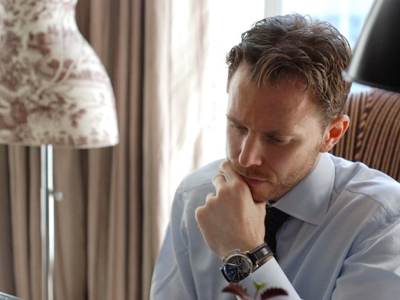
Last night I had the undeniable pleasure of being one of the judges for the Miss Republica Dominicana US 2009, along with judges from NY1, People en Espanol, a Dominican Charity and current and former models and fashion designers at the NY theater and nightclub El Morocco.

Combining the swimsuit and evening gown competition with personal interviews, the Miss RDUS featured eleven girls representing the various provinces of Hispaniola.

All striking from afar, the harsh light front and center mercilessly exposed any physical imperfections (of which there weren’t many) or psychological insecurities (of which there were a few).

Browsing through the CVs I saw a wide range of interests for these young girls, from social workers to medical students and business majors.

The reality is that it is easy to dismiss many aspects of pageants, but it takes courage to compete, be judged and step into the limelight center stage and overcome one’s phobias and paranoias (phobias that are, by the way, just as common as the fear of public speaking in the financial industry or classroom).

The young women did an excellent job and while some didn’t make it to the finals, they all were rewarded with the adrenaline rush and release of endorphins as they stepped into the limelight that is so closely linked to happiness in life.

Take a look.

Posted in beauty | Tagged , , , , , , , , | Leave a comment

India, Future of Fund Distribution?

Is India the market to shape the future of mutual fund distribution? With most attention these days given to UCITS in Europe, the RDR in the UK and financial re-regulation in the US, India’s Security and Exchange Board a month ago quietly released a two-page circular that might change the future of mutual fund distribution.

Inconspicuously entitled “SEBI/IMD/CIR No. 8/174648/2009”, the subject matter for one and a half pages and 16 articles is the “code of conduct for intermediaries of mutual funds.”

Aside from the generic guidelines around protecting client interests, providing investment documentation and highlighting associated risks, six of the 16 guidelines focus on commissions and kickbacks, including:

-disclose ALL commissions in the form of trail or any other mode received (art. 5)
-avoid recommending inappropriate products to get higher commissions (art. 9a)
-don’t encourage churning to earn higher commissions (art. 9b)
-client suitability is paramount and extra commission should not form the basis of recommending a scheme (art. 13)
-intermediaries will not rebate commission (art. 14)
-focus on financial planning to reduced the trend of kickbacks (art. 15)

There is active discussion in the Indian mutual fund market as to how much this will impact the industry and potentially change the distribution landscape – not only in India.

In the past, “avoid colluding with clients in faulty business practices such as bouncing cheques, wrong claiming of dividend, etc” (art. 8), could be downplayed as an emerging market only phenomenon, but following the recent financial scandals in developed markets and the current fight in the US around a consumer protection agency, the clarity of language offered by some emerging markets might cross borders and impact thinking in developed markets.

Or, as David Swensen, head of the Yale endowment, points out in his “lunch with the FT” in regard to basic research for manager selection around Bernie Madoff this weekend: “If you sat down and had a conversation with him (Madoff) about his investment activities and couldn’t figure out that he was being evasive, shame on you.”

Posted in Uncategorized | Tagged , , , , , , , , , , | Leave a comment

GLG DUMPS MONDAY MORNING MEETINGS FOR MOBILE TECH

GLG Partners has begun adopting mobile technology in an effort to improve communications among its managers – a move it believes will help drive the firm’s investment performance.

The UK-based manager, which acquired Societe Generale’s UK asset management business (SGAM) in December last year, has implemented a web-based ‘chat’ system that allows staff to update colleagues on client meetings and portfolio performance at the touch of a button.

Daniel Enskat, global head of consulting at Strategic Insight, says most firms now realise the necessity of tapping into this type of mobile technology. He says the iPhone application being developed by Vanguard shows how the firm is expanding its philosophy of investment simplicity to its communications with investors.

“Allowing investors to check their investments via a mobile device, and reducing the need for phone calls, shows Vanguard as an advocate for simplicity,” says Mr Enskat.

Europe, in particular, is leading the way with this type of development, he says.

by David Ricketts, Ignites Europe
Full article here

Posted in Uncategorized | Tagged , , , , , , | Leave a comment

Brand New World: Reverse Innovation & Darwin

Watch the vlog for “Reverse Innovation & Darwin”:

For decades, GE has sold modified Western products to emerging markets. Now, to preempt the emerging giants, it’s trying the reverse.

Thus starts an article entitled “How GE Is Disrupting Itseld” in this month’s Harvard Business Review by Jeff Immelt, Vijay Govindarajan, and Chris Trimble.

The article argues urges companies to “reverse innovation”, to develop products in emerging markets to distribute globally.

I commented on the theme in-depth in my book on fund distribution (www.globalfunddistribution.com). For some time now, the asset management industry globally has seen most of its product innovation originate in emerging markets, with the most successful and most creative solutions being exported globally.

GE takes it a step further by arguing that “if GE doesn’t master reverse innovation, the emerging giants (China, India et al) could destroy the company.

IBM CEO Sam Palmisano a few years ago promoted a “Globally Integrated Enterprise” (Foreign Affairs, Vol 85, No.3), which requires a fundamentally different approach to production, distribution and work-force deployment.

He warned against headquartered-centered views and “hierarchical, command-and-control” leadership.

They are on to something.

As recently pointed out in another blog, Europacorp, founded by Luc Besson, plans to produce more “melting-pot” movies, mixing actors and cultures in non-traditional ways, as a growing proportion of box office revenues come from emerging markets.

The shifting global landscape and growing influence of emerging markets more broadly defined (see “Bismarck”) is palpable on multiple fronts.

Emerging markets are leading a rebound in global consumer confidence, according to a new study by market research group Nielsen. Q2’09 confidence was strongest in Brazil, China, India, Indonesia, the Philippines and Australia, while confidence in the US, Germany, France and the UK was below average.

Brazil is on a role (and I am not influenced by my recent visit to Sao Paulo, Rio and Florianopolis in any way). It is hosting the 2014 World Cup, the 2016 Olympic Games (edging out Tokyo, Madrid and Chicago, all “developed” markets) and just discovered huge reservoirs of offshore oil.

“Rio is ready. Give us a chance and you will not regret it”, said Brazil’s president Lula da Silva in his speech (a former auto plant worker with a fourth-grade education). While geography played a big role in sending the Olympics to South America for the first time, it indeed seems to be the time of so-called “emerging markets”.

Sotheby’s reports that Hong Kong has surpassed London and NY as its largest wine markets, with mainland China on track to surpass all of them as the world’s largest buyer soon. Interesting, to say the least, especially given most Asians’ ALDH2 deficiency.

Financial services and other companies must adapt – fast – in order to survive these structural changes.

By 2013, according to Capgemini, Asia-Pacific will overtake North America as the largest region for HNWI financial wealth – China this year surpassed the UK, Brazil overtook Australia and Spain.

Jay-Z, who recently surpassed the Rolling Stones in album sales, offers advice on his latest release: “Whatever you’re about to discover, we’re off that.” Darwin 2009.

Posted in Uncategorized | Tagged , , , , , , , , , , , , | Leave a comment

back to the future… INVEST IN TWITTER NOW, MANAGERS TOLD

Already talked about this in 2009 – didn’t even remember it… (October 2, 2009)

Asset managers are being urged to build up their social media presence sooner rather than later.

Experts believe investors will favour those firms that can demonstrate a strong brand presence via this new form of communication, rather than those firms that choose to ignore its growing popularity.

Investing in these new methods of communication – such as Twitter, Facebook and YouTube – while others are cutting back will give managers a competitive edge, experts stress.

“This financial crisis has shown it is a window of opportunity,” says Daniel Enskat, global head of consulting at Strategic Insight.

“One thing that has changed is that everyone is going back to basics on communication. Clients are looking at brand and organisational stability, but there is also an emphasis on doing more with less money,” says Mr Enskat.

Speaking during an Ignites EuropeExchange webinar on the subject of social media, Mr Enskat said communication methods used by fund houses would be an integral part in winning back trust. Investors, he says, are looking for more “transparency” in communication.

According to a poll conducted during the event…

by David Ricketts, Ignites Europe
Full Article here

Posted in Uncategorized | Tagged , , , , , , , , , , , , | Leave a comment

FT – Social Media Webinar

This week the Financial Times/Ignites Europe invited me as a speaker and panelist for a live, online panel discussion on the use of social media by asset management companies, called the Exchange.

I presented an analysis I had written a few weeks earlier on http://www.globalfunddistribution.com alongside the head of marketing for Barings Asset Management, followed by a Q&A session with about 30 asset managers from across Europe which had dialed into the webinar (check the links below for the presentation and article).

My basic message was simple:

-The phenomenon and use of social media is changing communication patterns and is here to stay.

-Companies don’t need to rush into social media as there is no first mover advantage, but once they do sign up, need to make a commitment (there’s nothing worse than a five month old tweet).

-YouTube and other services can be used to reduce costs and to communicate in new ways with clients, employees and the public.

-Just like the Internet or IT, social media use at some point will be a necessary but not sufficient condition for brand awareness.

-European and Asian firms in comparison to their US counterparts are early adopters.

Distribution post crisis is about brand and communication. As Bill Gross noted, even the best performance in the world is meaningless if nobody knows about it (you) – he should know: an avid user of Facebook and Twitter, Gross has attracted close to $30 billion in new cash flows to his total return fund year-to-date through August 2009 and now officially runs the largest mutual fund in the world (approaching $200 billion in AUM).

Further proof: when you visit Pimco.com these days, a survey on why you are visiting offers Gross’ Investment Outlook as the first possible reason.

Tweet.

******
DSE presentation slides

Ignites/FT Article

Posted in Uncategorized | Tagged , , , , , , | Leave a comment

MUTUAL FUND FEE DISCUSSION: EUROPE & US

The European fund industry needs stronger, more independent fund boards, some analysts say.

To that end, Luxembourg fund association Alfi recently published a new code of conduct for the governance of Luxembourg-domiciled funds. The code includes a recommendation that boards “should act fairly and independently in the best interests of investors,” taking “particular care” when potential conflicts of interest arise.

Nevertheless, fund governance is just one of many factors that probably contribute to higher fees in Europe compared with the US. Fewer assets under management, different distribution structures and a lack of transparency all also help to explain why European funds tend to have higher expenses than their US counterparts, analysts say.

Daniel Enskat, head of global consulting at Strategic Insight, agrees fund governance “might play a role” in higher fund fees, but he says economies of scale and differences in distribution are ultimately much more significant.

Mr Enskat also questions how important fees are to investors more generally.

“Investors do not care about fees,” he says. “In a bull market they don’t care because their portfolios are going up, and in a down market they don’t care about it, either,” because a few basis points in fees pale beside several percentage points in investment losses.

by Marc Hogan
Ignites Europe
Full article can be found here.

Posted in distribution, EFAMA, information delivery | Tagged , , , , , , , , , , , | Leave a comment

China turns 60, Just Do It.

China is becoming the center of attention for the world.

Ahead of tomorrow’s 60th anniversary celebrations of the Communist party China again demonstrates its attention to detail, as shown by the army instructor in the picture above (Source: NY Times/. According to the NY Times, “soldiers have practiced endless hours to hold their rifles at precisely the same level. Photos show their instructors holding threads as rifle guides, or sticking needles in soldiers’ shirt collars, pointed at their necks, to correct poor posture.”

The whole world remembers the Olympic Games 2008 Opening Ceremony in Beijing, in particular the visual and musical countdown of the 2008 drummers in the stadium.

Leaving questionable and negative aspects of the planning aside, the preparation, precision and execution of the whole event, showcased China’s management expertise, willpower and ambition – alongside its growing global influence.

-HSBC this week moved its CEO to Hong Kong from London, acknowledging “Asia and China are the centre of gravity of the world and our business”.

-The G20 officially replaced the G7, mostly to make room for the growing role of China (and Brazil).

-Robert Zoellick, current president of the World Bank in a Johns Hopkins University lecture pointed towards the Chinese Renminbi and the Euro as alternatives to the US dollar (the World Bank forecasts 7.2% GDP growth for China this year).

-Japan is relying more on China than the US and Europe to reduce the Yen’s exposure to currency swings against the Euro and Dollar.

-Goldman Sachs raised its China GDP forecast to 8.3% for 2009 and 13.5% for 2010.

-“As the world’s economic center of gravity shifts to Asia, U.S. preeminence will inevitably diminish”, wrote Jeff Sachs in 2004.

-Capgemini/Merrill Lynch in its annual HNW survey found that the number of HNW investors in China this year surpassed the UK and is now the fourth largest in the world (behind the US, Japan and Germany).

-Dechert’s Financial Services group in a September 2009 legal update stated that such GDP growth is resulting in a Chinese middle class of 300 million people, with $3.3 trillion in household savings.

-PWC estimates a doubling of investors by 2012, to almost 70 million retail investors and 2,500 institutional investors.

-Porsche unveiled its grand tourer Panamera at the Shanghai Auto Show. Porsche changed the design to allow for more room in the back for Chinese executives, who like to use a chauffeur (since many of the rural entrepreneurs don’t know how to drive). China has surpassed the U.S. as the world’s largest auto market.

-Thomas Friedman in recent blogs has highlighted that in his view “future historians may well conclude that the most important thing to happen in the last 18 months was that Red China decided to become Green China.” Energy technology, or E.T., as Friedman calls it, will be as big as I.T. and driving force of business by 2050 and China intends to be a big E.T. player.

-Asia domiciled funds thus far in 2009 collected $60 billion through July, according to our database Simfund Global. China featured prominently, with a CSI 300 Index launch by China AMC attracting $3.6 billion in three days in July! China Universal gathered $1.3 billion into a Shanghai Composite Index fund.

When I visited Beijing and China extensively in 2008, several things stood out in meetings with regulators, companies and industry observers:

-Beijing vs. Shanghai: Just as in the US (NY vs. L.A.), Switzerland (Zurich vs. Geneva) or Asia offshore (Hong Kong vs. Singapore), there are important cultural and business management differences. The CSRC in Beijing drives the fund management industry, while Shanghai is the international avant-garde melting pot.

-Relationships are more important than in Europe and the US, not unlike other emerging markets such as Latin America or the Middle East – Round the World tickets and a few visits a year are not enough (see HSBC above).

-Fund flows of almost $200 billion in 2007 did not blow up during the crisis. Quite the contrary, bankers are hailed as “model workers” and after resilience in 2008 net cash flows are rising again.

-International fund managers need to make a strategic long-term commitment to China if they want to be successful, independent of whether via a JV, QDII, or dealing with the CIC.

-The highly trained Chinese parts of the existing JVs have taken advantage of their international counterparts expertise and are keen to broaden their business horizon beyond the domestic market (soon).

-Rebuild and improve: One should not be surprised by the stamina and ambition of China. The breathtaking buildings in the Forbidden City regularly were destroyed by fire, yet instead of despairing in front of the ashes, China each time got back to work, rebuilt its glory and used it as an opportunity to raise the bar higher.

-When you go to art.com, you can order a Picasso print and frame it or you can have it hand painted in China on oil and shipped to you – for 30% less.

Happy Anniversary.

Posted in asia, Chile | Tagged , , , , , , , | Leave a comment

Bismarck, G20, and Asia

As chairman of the Latin America Fund Forum 2009 in Sao Paulo last week, I had the pleasure of discussing the future of the region and emerging markets at large with a group of illustrious experts, among them the former head of the Brazil central bank, various global fund of hedge funds, private banks, investment banks and wealth managers.

For a detailed summary of the quantitative and qualitative arguments – which to my surprise include Otto von Bismarck as the new Godfather of “Emerging Markets” please visit http://www.globalfunddistribution.com.

Indeed, much points to the growing importance of emerging markets and a paradigm shift, including developed markets’ strategies to benefit from them:

Norway SWF’s $4 billion to emerging markets: Norway’s $400 billion sovereign wealth fund, the second largest in the world, has 10% of its oil fund allocated to emerging markets (after recent reductions from Europe and the US) and works with Ecofact and now SourceAsia and CSR China to provide the sovereign wealth fund’s “Council on Ethics” with confidential monthly reports on its emerging market investments.

China hails bankers as “model workers”: As a prelude to China’s 60th anniversary, the communist party is hailing Chinese bankers as “selfless guardians of national stability and social harmony”. Much in contrast to the West’s perception to the profession, selected bankers are touring the country as “model workers” and speak at various national gatherings (with mandatory attendance – bankers don’t seem to be the hottest ticket in town for now).

G7 gives way to G20: World leaders of the group of 20 (G20) formally replaced the long-standing group of 7 (G7) as the main body to discuss global economic issues, in recognition of the growing role of emerging countries in the global marketplace, as noted by host President Barack Obama during the current meeting in Pittsburgh.

Asia and China center of gravity of HSBC’s world: Chinese authorities won’t have to deal any longer with executives that are third or fourth in line, as HSBC is setting the precedent (and raising the bar, according to one senior executive in the region) with the relocation of its CEO from London to Hong Kong days before the 60th anniversary celebrations of the communist party. HSBC wants to focus on business relationships between Asia, Latin America, the Middle East and Africa (and recently raised $19 billion in capital for respective investments), as Hong Kong and China already account for 40% of pre-tax profits. HSBC stated, “Asia and China are the centre of gravity of the world and of our business.”

Our secular view – highlighted quantitatively in a recent analysis: Independent of total AUM figures, Asia and other emerging markets will be the growth driver for the industry in the coming five years and the future. Time to brush up on my mandarin: 晚安.

Posted in asia, Brand, Brazil, Chile, China, consulting, Uncategorized | Tagged , , , , , , , , , | Leave a comment

Casa do Chico – Florianopolis, Brazil

Excellence when you least expect it. The last day in Florianopolis, it is cloudy and cold and Tuesday seems to be the Brazilian day of rest, with all restaurants and cafes closed in this sleepy part of Floripa, the Lagoa da Conceicao.


Luckily, Chico (www.casadochico) is open and means business. Simple decor, polite waiters and we are the only customers at 3pm. Starters include a palmito salad and various Brazilian pastries – they are hot, fresh and so good that there is barely room for the main dish after finishing a bunch of them.

The lunch special is a sizzling plate of veggies and all kinds of sea food (Chico runs a local fish market and seems to have a monopoly on fresh fish) grilled in olive oil, with a side of rice. After several short breaks I have to give up eating although my palate tells me to keep going – sea food crack. I finish the meal with a short espresso and it’s time to walk back to the hotel, start packing and mentally prepare for the trip back to NY.

Obrigado chico.

Posted in Uncategorized | Tagged , , , | Leave a comment