Djoniba Peridance BASo Haiti Benefit in NYC

BAILA Society performed at and helped host a Haiti fundraiser for Djoniba’s Haitian dance teachers at Peridance this weekend in New York City. This was a very special event for us as it helped directly support the families of the drummers that teach for Djoniba at the Peridance Capezio Dance Center.

Many of the teachers and dance companies that instruct at Peridance performed at the event, again highlighting Igal Perry’s vision of dance as just movement that knows no boundaries. Igal, whose choreography is currently featured at the NY City Center run of Kings of the Dance, helped us welcome the guests and after two minutes of silence there was silence no more and the show began.

BAILA Society with its foundation is very active in charity work and we were proud to be part of this great evening – this is our second Haiti fundraiser in February. In case you weren’t able to be with us last night, here is a picture gallery of the event.

Posted in movement | Leave a comment

Survival of the fittest: case study on transformation & Asia

In my recent posts on secular trends in the global asset management I often pointed out “Darwin” as one of the metatrends in the industry. Not “survival of the fittest”, but “survival of the most adaptive”.

The asset management industry is not the only one having to deal with this global metatrend – let’s take photography as a case study. Kodak’s CEO this weekend in an interview with the Financial Times said he expects the firm’s annual digital revenues to reach $7 billion in three years, because of strong demand in Asia.

There are three cases of Darwin in this statement.

First, adaptation on steroids: Kodak’s business five years ago was all film – today 70% of revenues are digital. This means management at some painful moment realized that the “Kodak moment”, and with it the firm’s entire business model, was a dinosaur and bound to die. Soon.

Second, Asia rings in a new world order. CEO Perez in his FT interview noted that the proportion of revenues from Asia will grow quickly from today 15% and thus necessitate significant regional investments.

Third, reverse engineering. Economies (and populations) in Asia are growing much faster than those in the US and Europe (and Japan). Kodak will focus its design, R&D, business relationships and manufacturing on where the growth is coming from (you can find numerous examples on companies trying to stay relevant in my recent blogs: e.g. Facebook; Porsche; iPad, Andy Warhol, et al.

Specifically for asset management the process of reverse engineering is becoming ubiquitous: many European and US fund houses are moving their global heads of product development to Asia or are testing innovative ideas locally in Asia first (e.g. DWS launched its climate change theme first in Taiwan, then in Germany and the US).

One can of course argue that photography is the exception (firms have no choice but to move towards new technologies (digital) to stay relevant) and that industries like money management, luckily, don’t fundamentally change much over time.

Au contraire.

The turnover in industry leadership in the asset management industry is among the highest in the world – and accelerating. Each five to ten years close to 70% of industry leaders disappear from the league tables (and new leaders emerge – Blackrock, Pimco, T Rowe, Carmignac, Aberdeen, ring a bell?).

Moreover, even the most steadfast icon of all times, Mickey Mouse, had to undergo an extreme makeover recently, when executives decided that Mickey needed to be revamped in an upcoming video game called “Epic Mickey” in order to stay relevant with new audiences.

This prompted the New Yorker to write an imaginary memo from the board of directors entitled “Modern Mickey” with advice including: “Let’s have Minnie appear on “The Real Housewives of Disney,” along with Cinderella, Snow White, and the Little Mermaid. Then Minnie could sneer, ‘Do any of you bitches not have a gay husband?’”.

Posted in Brand, management | Leave a comment

Asset management 101: when “four” sounds like “death”.

Theory and practice… theory suggests mastery of today’s increasing business complexities as a prerequisite for success, while the reality of business success often lies in getting the basics right (and I mean baaaaaasics).

Don’t believe it?

– Consider the view of some of the most prestigious wealth managers and private banks in the world in response to how they weathered the credit crisis? Returning phone calls.

– In one of our early studies on wealth management, a U.S. fund manager had inadvertently sent out statements to their clients showing zero balances. Priceless.

– Among the key criteria to being a preferred provider for professional fund buyers? Don’t call all the time, but do get back immediately with tailored information when specifics are requested – i.e. call back.

Basics.

Of course, Asia is a mystery to most non-Asian financial institutions and our trips, meetings and discussions have enlightened us mightily over the years (needless to say it’s still pretty dark regardless).

A few interesting anecdotes on getting the basics right in China:

– When invited to dinner by a client, bring a gift such as wine or tea (not rocket science, polite and universal); but never bring “four” items of anything… “four” (四; sì) in mandarin sounds like “death” (死; sǐ)- also the reason why you won’t find a fourth floor in any building. Also don’t bring any kind of time pieces (no Lange & Soehne, pls) since the words “give clock” are very similar to the words “attend someone’s funeral”.

– Then again, if you have enough money double the four and bring eight items and you are in luck. Eight (八; bā) sounds like “prosper” or “wealth” ((发 – short for “发财”; fā) – even in regional dialects the words for “eight” and “fortune” are similar. Which is, by the way, why someone in Chengdu paid close to $300,000 for a telephone number with only digits of 8 in it.

Certainly, by now you think I am exaggerating and this is not important in the financial services industry. Maybe, but companies that have been in the region for a while are very much focusing on those details:

– Companies with a long history in the region have traditional Chinese names that carry positive connotations, e.g. Citibank and HSBC.

CITIBANK, 花旗銀行, 花旗 (Hua Chi) – “colorful flag”
HSBC, 匯豐銀行, 匯豐 (Hui Fong) – “flourish, rich”

– International fund managers, such as Fidelity or Allianz, use names similar to their Western names but which also have specific positive investment connotations:

FIDELITY 富達 (Fu Da) – “rich, prominent”
DRESDNER ALLIANZ 德盛安聯, (De Sheng An Lian) – “virtue, flourish, safe, joint”

Getting the basics right. Not a guarantee for success, but it sure as hell makes life easier at dinner.

Posted in Uncategorized | 1 Comment

Secular trends in asset management

There is no wave without wind – reviewing some of the most common Chinese proverbs for the new year always helps put things in perspective, especially with all the noise in the market and our industry these days.

Following some eighty in-depth conference calls with leading distributors in Europe and around the world, today more than ever it is important to look beyond the ‘mot du jour’ and distributors are looking to asset managers to do just that. I will share with you the most common feedback and complaints later this week, but here are the top two:

1. Be a gentleman (woman) – don’t call me all the time, don’t just chase assets and – most importantly – don’t stop calling during a time of crisis.

2. Help us do our job – most companies still make the mistake of just talking about themselves, instead of providing thought leadership.

Thus, yes, it’s nice to start a conversation with “newcits” or “PIIGS” (unlike BRICs not a good accronym, aka Portugal, Italy, Ireland, Greece and Spain), but it’s more important to offer thought leadership (and research) around the themes that matter for the next decade.

Here they are, the global metatrends that matter to build your business in the next ten years as the investment management industry goes from $100 trillion to $150 trillion+

Back to basics: despite the difficult decade, mutual funds overall gathered $7.3 trillion in net flows in the last ten years. Post-subprime and Madoff, we expect the back to basics theme to benefit mutual funds, if positioned correctly in the context of each specific target region and market.

Global middle class as mutual fund growth driver: An investing middle class is the foundation of success for mutual funds worldwide (along with retirement incentives such as 401k or superannuation, which accelerates growth). The global middle class will grow from 450 million people today to almost 2 billion in the next ten years, overwhelmingly in emerging markets – is your firm culturally ready to cater to them?

Darwin: Only firms able to adapt to and balance global, regional and local market requirements will be successful. Changing information needs and tailored content delivery and marketing messages in addition to performance leads to accelerating turnover of industry leadership (two thirds of the current top 50 globally will disappear in the next ten years, and vice versa).

West-to-East (…and East-to-West): The trend from west to east is well documented. But now we also see a growing trend from east to west, as Asian firms are expanding in Europe and the US, especially Chinese firms. Companies able to leverage existing and build new business partnerships can benefit (Eastern SWFs call it a “once in a lifetime opportunity” and are registering offshore vehicles to sell in the West).

New Normal in Europe: $750 billion came out of long-term funds in Europe from the major distributors in 2008 during the subprime-crisis, half of that from Europe equity, Europe fixed-income and Absolute Return, i.e. the bread and butter of European firms. While some $150 billion came back to those categories last year, the inflows benefit independent fund firms and we expect the same trend to continue in 2010 (who will get to the $14 trillion in cash earning zero across Europe first?).

Independence, brand and communication: Independent asset managers are attracting larger amounts of inflows as some large institutions have lost the trust of the customer, less so in Asia/China than Europe/US. Beyond best-in-breed processes and performance, perceived brand and pro-active communication with professional fund buyers drives flows (stay tuned for a case study on this).

Changing investor mindset(s): Retail funds continue to be sold, but selected adviser-led client segments are now sufficiently educated to use funds for their long-term retirement needs. IFA clients during the downturn redeemed less and will start to re-allocate investments towards equities in the second half of 2010. While transparency and safety remain key, education around equities and asset allocation will play a more important role this year.

Happy Chinese New Year (of the Tiger…. might want to rebrand that).

Posted in Uncategorized | Leave a comment

Global investment management reaches $100 trillion – funds leaders of the pack…

Banking as a broadly defined industry these days isn’t much fun, as isn’t being a small(ish) European country that just recently got over the success of “300” and Sparta and now is back in the unwanted non-Olympic limelight.

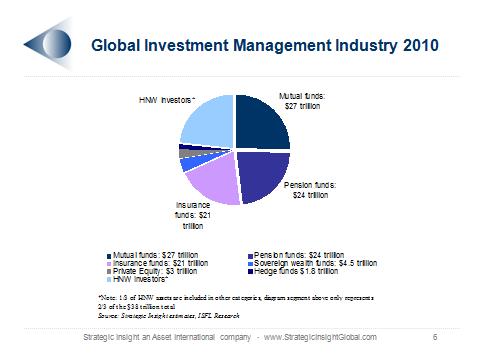
On the contrary, the investment management business globally according to proprietary Strategic Insight research surpassed $100 trillion in assets under management last year, and – for some – is actually a lot of fun. Footnote: these total AUM figures might actually be on the conservative side despite being adjusted for double counting.

Who is leading the pack? Wealth management and mutual funds.

The mutual fund industry with $27 trillion of total AUM is leading the way as an investment vehicle, but of course the big prize is wealth management/HNW investors, which approach $40 trillion in total assets.

This has a number of important strategic implications.

1. Growth is primarily in Asia, for funds and wealth management:

HSBC’s head of private banking is moving to HK (shortly – always follow your chairman), as is JP Morgan’s international private banking chief (moving trucks stopped by this week). Brady Dougan, Credit Suisse CEO, yesterday announced Q4 results and stated that one quarter of 2009 private banking net flows came from Asia (we have commented numerous times on the metatrends “West to East” and a growing “Global Middle Class” as growth drivers for the region).

2. Battlegrounds Private Banking (and Switzerland), fun for some:

Recent proprietary Strategic Insight distribution research showed that most private banks see growth primarily outside of Switzerland and with new client segments, but still private banking and wealth management in Switzerland (for on- and offshore investors) remains a core segment of the market (see graph below).

Credit Suisse clearly had fun this week announcing its 2009 results – since it attracted CHF35 billion in net inflows, while its rival UBS lost CHF90 billion in net redemptions. Some analysts now forecast that Credit Suisse will surpass UBS as Switzerland’s biggest bank in 2010. Definitely not fun for Oswald Gruebel, who ran Credit Suisse before he took over UBS. Still, despite the losses UBS is doing well across Asia, given that most investors there don’t care much about the issues Europe and the US are dealing with.

A few years ago listening to Singapore being described as the “Switzerland of the East” only caused a few polite smirks in Zurich and Geneva, but the trifecta of issues around subprime, taxes (Italy et al), and bank secrecy have caused a big divide in the country. Clearly, Singapore’s SWFs launching offshore UCIT vehicles for Europe distribution and their declaration in Davos of a ‘once in a lifetime’ opportunity for Asia to grab global market share didn’t result in smiles in the Alps either.

3. Secular shifts in distribution in Europe (and the US) are a big opportunity for independent firms:

As part of our broad based professional fund buyer survey across Europe (and the US) the theme of independence stood out, both as in independent financial advisors being a growth opportunity for non-proprietary fund distribution as well as independent money management firms helping private banks and other distributors re-establish their respective tarnished brands with angry customers.
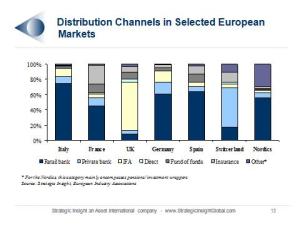
Switzerlands of course remains dominated by private banking (no surprise here), but even there we see slow changes. Of course, much depends on the mood of the country, e.g. the UK has seen $225 billion in net new flows over the last five years across asset classes (happy), while Italy on the other hand suffered from $235 billion in combined net redemptions (not so happy).

But even in Italy the banks are not willing to pro-actively kill the attractive mutual fund business and are opening their doors again slightly, while promotori finanziari used the crisis to grab market share and sustain and develop relationships with their more educated client base and to introduce independent fund firms to investors in a variety of packages (white labeling, separated accounts, funds and wraps).

4. An owl? Transparency and safety looking for a suitable partner:

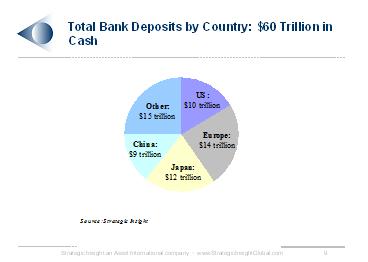
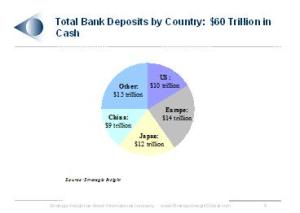
Lastly, investors collectively now hold $60 trillion in various forms of cash effectively earning zero, Europe with $14 trillion leading the way. Getting investors (retail of HNW) to shift even a small part of that total into investment vehicles is the big opportunity for mutual funds. Thus, the SFA in Switzerland currently is running a CHF1 million campaign promoting the transparency, diversification, liquidity and safety of mutual funds through a series of television and online ads featuring a savvy owl.
See for yourself, boring is the new black: http://www.myfund.ch (Fonds. Die kluge Anlage.)

Posted in Uncategorized | Leave a comment

BASo in Santiago de Compostela

BASo in Spain, Santiago de Compostela:

Volando entre tus brazos:

Opening showcase with Paloma Suanzes, Paradizo Dance and BASo:

Posted in Uncategorized | Leave a comment

BASo & Miss Universe Organization

We are continuing our work with Miss Universe and Miss USA.

Stay tuned for more footage, but 2010 promises to be as, if not more, exciting than last year.

Videos from the Official Miss USA YouTube Channel from 2009:

Part 1:

Part 2:

BASo Performance with Miss USA:

Posted in Uncategorized | Leave a comment

The race to define sustainability in money management

We have been advising clients on issues around sustainability since the late 1990s, when one of our European clients first came to us with the idea to convert his company’s whole product line to SRI funds.

Naturally, the idea was good but the board voted against this macrobiotic revolution of its money management business. Ten years later we are in the umpteenth rebirth of the idea and we still lack a definition, terminology and brand with investors.

SRI, ethical, Sharia-compliant, green, climate change, environmental investing and much much more.

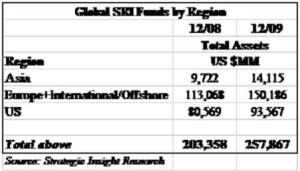
The theme of course has always made more sense for SMAs than for publicly registered pooled vehicles, after all your vice might be my virtue and compromises are hard to find these days (ask the US Senate or the European Commission). Today we have some $260 billion in sustainable funds worldwide. First, that is still very small (see reasons above). Second, it’s up from $200 billion last year. Third, Europe is the leader globally, while Asia, not a surprise, does not shall we say place a lot of emphasis on the theme for now.

But money managers shouldn’t be too torn up or frustrated since even brand-fanatic industries like fashion cannot figure it out.

We now have organic and pre-organic clothing lines as part of a movement towards sustainable fashion.

However, nobody in fashion is able to define sustainability (ask ten people, get ten different answers).

For de la Renta it’s traditional techniques, for others locally sourced materials – and Dries van Noten calls sustainable fashion a “contradiction in terms”.

Since customers and the Zeitgeist demand more transparency, whether it’s your chicken, socks or investments, it seems best to mislead customers until there are common standards and regulatory overlays, case in point: pre-organic.

Pre-organic? Cotton from a farm on its way to being organic… there you have it. Maybe one should offer a pre-ethical fund, with a portfolio manager on his way to finding his conscience.

However, this seems here to stay and not just a fad – the FTs fashion editor this weekend called green “not the new black, but a paradigm shift that demands its own language”.

I guess we need to – again – turn to Bill Gross. After bringing us the “New Normal” he this month recycled “Finding Nemo’s Ring of Fire” for countries he would avoid (“the U.K. is a must to avoid. Its Gilts are resting on a bed of nitroglycerine”).

Absolute return was the last biggie (never clearly defined), followed by BRIC (Jim O’neill claimed it and became famous).

Green, ethical and sustainable investing will define money management in more ways than one and past performance also here is no indication of the future – the man that brought us the iPod is now stuck with the iTampon (and some trademark issues).

The winner will earn more than 2-and-20. Japan and China know.

Posted in management | Tagged , , , , | Leave a comment

Asia moving in on developed markets…

West to East… East to West.

While much of the growth in coming years will be driven by emerging markets and a growing class of middle class and HNW investors there, Asian institutions are also taking aim again at breaking into Europe and the US – Singapore, the “Switzerland of the East”, taking the lead.

This week GIC chairman Tony Tan Keng-Yam, speaking in Davos, talked about a “new golden age” for Asia and a “once in a lifetime” opportunity for Asian financial institutions to take market share away from its global competitors. Journalists in op-eds this weekend commenting on the mood at the WEF noted the growing pride and economic muscle of emerging markets.

In the asset management industry we have seen this trend for some time now. Temasek’s fund manager Fullerton already manages a few billion dollars in external money and last year opened its doors to retail clients in Singapore – in addition, Gerard Lee is intent on growing its 5% European AUM to a much higher number via Cayman and Luxembourg UCIT vehicles.

All in all, more institutions are waking up to the very attractive asset management business globally. Hedge funds are launching UCITS III (‘newcits’) structures to diversify their asset and client base, Asian managers are building offshore fund lines to penetrate developed markets just like US and European managers in recent years have started to push offshore products to Asian clients via hubs in Hong Kong, Singapore and Taiwan; and Chinese firms are setting up shop in Hong Kong to market their expertise abroad.

Not to be outdone, Osama Bin Laden this weekend posted a video talking about global warming and global currencies. Interesting times.

Posted in money | Tagged , , , , , , , , , , , | Leave a comment

Growing global distribution – more than just performance…

I am wrapping up some 75 in-depth discussions with regulators, distributors, institutional investors and asset managers globally on the changes in the global asset management distribution landscape in the last two years – the results will be published in a second volume of “Global Fund Distribution” this spring (www.globalfunddistribution.com).

In the meantime, let me start with a few key findings:

1. Performance… saying it doesn’t matter is a bit harsh, but it really doesn’t as long as it’s somewhat stable and transparent. Innovative marketing, portfolio transparency, very basic relationship management and operational aspects are much higher on professional fund buyers’ lists, especially post-crisis.

2. Product wizardy… some niche products are good to open doors, but ,globally, “cookie-cutter” products that are easily explained and at least basically understood have worked best with wealth managers concerned about clientsafety.  Institutions are surprisingly late to the thematic game and “quite sad in their timing” (also an opportunity for asset managers). It’s ok if your product sucks, as long as you have something else on the shelf that works.

3. Information and content delivery: Is viewed as a commodity and if it’s not best in class (and timely and detailed) is not even looked at. Analysts read your monthly report if you are JohnPaulson offering your annual projections otherwise you are a needle in a haystack.

4. Be innovative, don’t talk about yourself (imagine you are on a first date): Monthly reports used to be delivered as a pdf via email – analysts now like to see it in newer, shorter, formats – as a blog, vlog or tweet. While that poses compliance issues it can deliver added value, if you talk about something other than your product (the calls, factsheets, reports, roadshows, and seminars are enough). Less is more when it comes to yourself, but more is more if it comes to views on themes, other products and market trends. Lots to catch up on for many firms, since most of them still think twitter is the bird that is friends with Sylvester.

5. Lots of disasters, some exceptions: Many companies completely ruined their reputation during the crisis by disregarding basic relationship management principles… (again, the first or second date comes to mind) – they didn’t call, they minimized local teams and hibernated in their respective headquarters. Some others did a good job and are benefiting from it (Aberdeen, Schroders, Blackrock et al). Time to review dating 101, but it takes more than Godiva chocolate and flowers to get another chance when you didn’t call her back for two months after your first date.

Posted in distribution | Tagged , , , , , , | Leave a comment