Leadership turnover: Apple, Google, MS and the fund industry

We have discussed the accelerating leadership turnover in the global asset management industry quite a bit of late, along with concentration of assets and flows to fewer products.

In fact, the 50 bestsellers in the fund industry in the last twelve months gathered almost $400 billion, i.e. $8 billion on average for each product in net flows, with a heavy tilt towards the bestsellers even within the bestseller list (the “Billionaires’ Fund Club”).

A lot of their respective success comes down to a few factors, including product quality, brand, service, account mgmt, marketing, tailored information delivery and commitment (not fees!).

But, these outliers or black camels (swans are so 2009) are not exclusive to the financial world.

I am on the west coast for board presentations, having lunch at “top of the market” while overlooking the bay area – what better time to write about…

Apple yesterday moved past Microsoft to become the most valuable IT company in the world, largely around its ability to innovate with a few distinct products – complex products featuring great simplicity, at a premium.

As the NY times said, “the click-clack of the keyboard has ceded ground to the swipe of a finger” across a multi touch screen. Simplicity wins.

The future battle seems to be between Apple and Google, not Microsoft. Ballmer seems to have realized it and this week reshuffled his management team.

Our research along with case studies around best selling companies and their respective business drivers shows that doing a few basic things right – or wrong – alongside sometimes fortuitous timing, largely determines on which end of the list companies end up.

Top kill.

——————————–

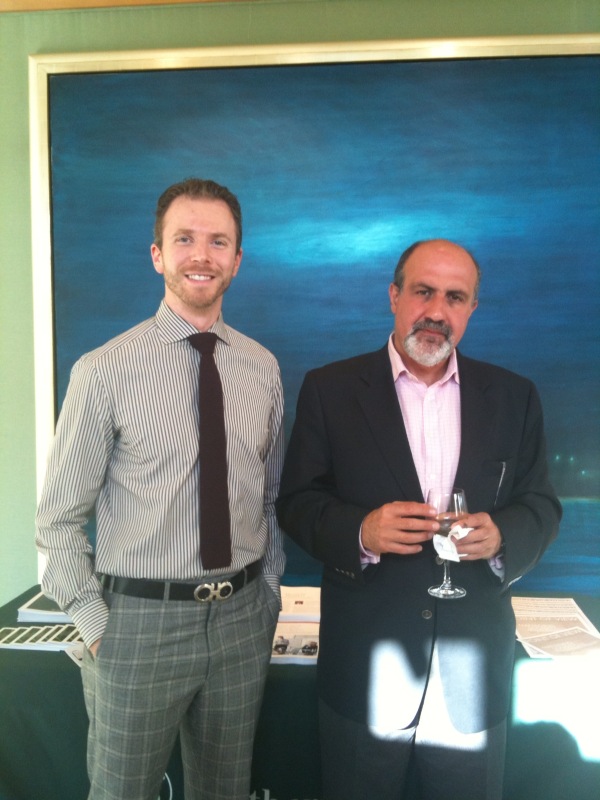
Our new writeup, “Mapping Fund Opportunity and Expansion Against Global Financial Risks”, features Europe’s debt crisis, the recent “flash crash”, and rising volatility compared to the $1.3 trillion of global fund inflows in the past year. We discuss these along with insights from our dinner with Nassim Taleb, author of The Black Swan; a preview of SI’s new research on global distribution; a Japan case study of innovation in asset management, as a cloud computing and smart grids fund raises over $1 billion; and managing alternative strategies, financial technology, and complexity. http://www.strategicinsightglobal.com
Posted in asia, black swans, Brand, distribution, management, money | Leave a comment

Accelerated leadership turnover, why the winner takes all…

We have discussed the accelerating leadership turnover in the global asset management industry quite a bit of late, along with concentration of assets and flows to fewer products.

In fact, the 50 bestsellers in the fund industry in the last twelve months gathered almost $400 billion, i.e. $8 billion on average for each product in net flows, with a heavy tilt towards the bestsellers even within the bestseller list (the “Billionaires’ Fund Club”).

A lot of their respective success comes down to a few factors, including product quality, brand, service, account mgmt, marketing, tailored information delivery and commitment (not fees).

But, these outliers or black camels are not exclusive to the financial world.

Apple yesterday moved past Microsoft to become the most valuable IT company in the world, largely around its ability to innovate with a few distinct products – complex products featuring great simplicity, at a premium.

As the NY times said, “the click-clack of the keyboard has ceded ground to the swipe of a finger” across a multi touch screen. Simplicity wins.

The future battle seems to be between Apple and Google, not Microsoft. Ballmer seems to have realized it and this week reshuffled his management team.

Our research along with case studies around best selling companies and their respective business drivers shows that doing a few basic things right – or wrong – alongside sometimes fortuitous timing, largely determines on which end of the list companies end up.

Top kill.

——————————–

Our new writeup, “Mapping Fund Opportunity and Expansion Against Global Financial Risks”, features Europe’s debt crisis, the recent “flash crash”, and rising volatility compared to the $1.3 trillion of global fund inflows in the past year. We discuss these along with insights from our dinner with Nassim Taleb, author of The Black Swan; a preview of SI’s new research on global distribution; a Japan case study of innovation in asset management, as a cloud computing and smart grids fund raises over $1 billion; and managing alternative strategies, financial technology, and complexity.

Posted in Uncategorized | Leave a comment

Keynote speech on China-U.S. alongside John Kerry in NY

In early June I will give a keynote luncheon on the role of China and the US in the asset management world at the China Institutional Investment Conference in NY alongside John Kerry, who in his capacity as Chairman of the Council on Foreign Relation in the Senate will speak on China and the Global Economy. Other speakers will be the chairmen of the leading Chinese asset managers and US institutional investors.

We have touched on industry “metatrends” at various conferences this year, including Hong Kong a few weeks ago and Monaco later next month, including “West-to-East/East-to-West”, the rise of the global middle class, $60 trillion in cash on the sidelines globally, the role of mutual funds in times of crisis, and investment dichotomies (active/passive, investment solutions/themes, large firms/boutiques, developed/emerging markets, equity/bonds, asset allocation considerations).

Those themes were highlighted in stories of the most successful companies in the media – recent articles featuring Strategic Insight:

Barrons: Taking on the World

Bloomberg Businessweek: Carmignac Second Only To Gross

Cinco Dias: JP Morgan y Carmignac

Dow Jones: Global Shifts in Asset Management

Posted in asia, Brand, China, management, money, politics | Leave a comment

Dinner with Nassim Taleb in NY

Last night we had dinner with Nassim Taleb in downtown New York, who afterwards gave a keynote speech on his new edition on “robustness and fragility” when it comes to Black Swans.

Always provocative in his remarks, Nassim covered black camels in the Middle East, how he is assisting Cameron with his UK policies, and why U.S. politics are not robust to black swans. I will share more details on the dinner discussion and his keynote speech in my next blog. Some of his current thoughts were featured recently in our http://www.ai5000.com sister publication (“a life in uncertainty”).

Our clients will have the chance to sit down with Nassim later in the year in our Europe office – stay tuned for details.

Posted in black swans, Brand, management, money, politics | Leave a comment

Mutual funds in times of crisis

What is the role of and the impact on mutual funds in times of crisis? In light of yesterday’s events – the brief 1,000 point plunge of the Dow, currency roulette (Euro and Pound vs. Dollar), elections in the UK, the Greek debt situation – and the myriad of uncertainties in the market today, it is worth reviewing Strategic Insight reserach on investor redemption patterns in times of distress.

Investors typically do – nothing.

Looking at 85 years of fund history, we have concluded that capital preservation driven withdrawals have always been short lived. During past times of financial uncertainty (1987 stock crash, multiple recessions, 9/11, multiple wars, Tsunamis, SARS, Asian crisis, LTCM, sub-prime, et al), investors reduced (sic!) the turnover of their financial assets.

Redemption activity tends to decline in a bear market, with the exception of brief and modest spikes during sharp down-market days.

Behavioral elements such as myopic loss aversion and inertia partially explain this trend, but there are additional structural buffers in the fund industry.

Portfolio managers always act as a buffer as their purchasing and redemption patterns mitigate short-term emotional withdrawals by investors. Moreover, retirement investing, dollar-cost-averaging, asset allocation considerations, broader diversification through investment solutions and some opportunistic buying will prevent sustained and large net redemptions in the fund industry.

And indeed, despite numerous investor concerns and a heavy emphasis on fixed income products, mutual funds in the last 12 months attracted $1.2 trillion in net cash flows around the world, including some $350 billion in the first quarter of 2010. Back to basics.

Posted in Uncategorized | Leave a comment

Japan case study: innovation in asset management, cloud computing and smart grids

Japan is a parallel universe. Whenever I travel to Tokyo (or when clients from Tokyo visit us in New York), I am amazed to how completely different Japan is – always extremes, never middle of the road.

Anyone that has spent time in Tokyo and the rest of Japan knows the feeling. Finding a building? Well, yes, there are no English signs or anyone that can or is willing to speak English, which can make things slightly complicated when you are running late for a meeting with the board. But that’s the easy part.

House numbering is where the real fun begins. Japan divides the city into small sections, each with its own numeric code. If that confuses you, that’s only the beginning – the houses within each zone are labelled based on either the order in which they were constructed or clockwise around the block. Got it?

Good luck.

Once you are in the meeting, you of course better understand the very different business etiquette, appropriate use of hands, cadence, and the fun of using translators.

Anyway, a long intro to why Japan is bringing you a slice of the future for asset management. For me, Japan has been the most interesting case study of distribution, sales and product innovation in recent years (and I’m not even going to get into issues such as baby-mother structures, the post, income demand or retirement).

Let’s take Nomura as a case study.

In 2005 and 2006, 90% of all products in Japan were sold via banks, and the products almost always had a track record of at least one year and a focus on multi-asset class diversification. Nomura successfully sold “MyStory” during that time and the fund at some point used some twenty sub-advisors and had $20 billion in AUM.

Then the crisis happened and Japan flipped the switch. Investors lost significantly, and the response was to tell them they should increase their risk appetite to win back some of the losses (sic).

So distribution turned upside down. Now securities houses sold 90% of mutual funds and almost all of them had no track record, i.e. new funds with exotic themes to tell an interesting story.

One such story in 2009 was US yields mixed with a basket of currencies. Nomura sold many billion dollars of its US High Yield fund, primarily the share class linked to the Brazilian real. Yes, Sao Paulo has the largest Japanese population outside of Japan, but still betting on the real did not work out for everybody (ask UBS Pactual).

Now Nomura switched the flip again. From the insatiable demand for income and the currency story to something more conceptual, but decidedly cool: the iPad and Google.

Nomura in the spring of 2010 partnered with RCM (part of Allianz) and devised the Nomura Cloud Computing & Smart Grid fund. Sub-advised by RCM US, RCM Asia Pacific and AGI (with a bottom up research process labelled “grassroots”), the fund uses the cloud computing of Apple and Google’s smart grid work to market the green technology investment benefits.

Don’t think it works? Au contraire. The fund sold almost $1.5 billion in April 2010 (and once a fund sells in excess of $1 billion in Japan, it’s out of the gates and ready to target $5 billion).

Nomura is a marketing powerhouse and continues to flex its muscle when it comes to combining hype, vogue and investing.

A few years back it sold the Nomura Pictet Premium Brand fund, and Japanese investors rushed in the door to invest in high-profile names such as LVMH and Hermes, now it decided to take advantage of the new sustainability theme in investing, since green technology has been among the better-selling themes of late.

We see a ton of innovation around the world these days when in investment management and mutual funds, but Japan definitely has been and continues to be on the forefront, not only inasmuch as the product design is concerned, but also in regard to marketing and cutting-edge information delivery.

Nomura’s website features a ten-minute video for the cloud computing/smart grid product to explain the concept and make the investment case to clients – and the literature takes conceptual simplicity to new heights.

Luckily it is easier for foreigners to learn about cutting edge product and marketing themes in Japan than to find a building in Tokyo.

Arigato gozaimashita.

Posted in asia, Brand, distribution, management, money | 1 Comment

Dear SEC…

Any industry these days is concerned with brand and public image, but the SEC has taken it to a whole new level since the crises – in their case: crisis.

It was supposed to be a sleepy but powerful post Great Depression era watchdog operating in the background for the protection of the common man (and woman), something a little bit like Spider-, Super- or Ironman, but somehow the SEC nowadays is much closer to Robert Downey Jr.’s unwanted pre-Ironman drug headlines than the quiet Baker street analyst, Sherlock Holmes.

But, let’s review the basic tenets before we get to the juicy stuff (it’s still odd to me to write SEC and juicy in the same sentence, but they successfully reinvented themselves).

“The mission of the U.S. Securities and Exchange Commission is to protect investors, maintain fair, orderly, and efficient markets, and facilitate capital formation.”

Weeeeeell, that hasn’t really been going to well since Bernie and Sir Allen showed up out of nowhere. They actually didn’t really show up out of nowhere, a lot of people ran over to the SEC to raise a variety of flags, but, I am surprised to say, the current headlines have managed to surpass M. Madoff in terms of celebrity factor. Sort of like Lady Gaga leaving Britney Spears in the Iceland dust.

And it started pretty well inasmuch as emergency responses are concerned. Fire the white gray-haired man and put a successful woman in charge to clean house and reinstate fear and trembling.

And, yet again, it looked good when the SEC came out with blazing guns to charge Goldman Sachs with fraud last week.

And then? Porn.

As many journalists said late in the week: you can’t make this stuff up.

Since the financial system almost collapsed the inspector general conducted over 30 probes of employees checking out porn instead of balance sheets.

Hm.

Most of you have seen it already (ABC News reported on the memo on Thursday), but let’s recap for kicks.

The economy is nearing another great depression, the financial world is on the brink of disaster and huge corporations are collapsing.

What does the senior attorney at the SEC Washington headquarter do all day? Check out and download porn, supposedly eight hours a day. If you make porn your day job, naturally, you have to put the stuff somewhere and hard drives tend to run out of space. So he burns the files to DVDs and puts them in boxes around his office.

Excellent organizational skills.

Well, that’s the attorney. Since Enron we all know that the real power lies with the accountants, so surely they are saving the world. Not exactly, they decided to leave that up to Ironman and jump on the porn wagon. But, at least they are thorough and tenacious. One of them, accountants that is, was blocked more than 16,000 times in one month from visiting classified porn sites, because the SEC takes those firewalls serious. But, smart man, he then bypassed the SEC filters and filled his hard drive by using Google images. The SEC gave him a two-week suspension.

Downloading porn is tough, so it’s better left to senior level employees. Apparently close to 20 of them made $250,000 a year.

Chairman Schapiro these days can’t be happy.

The latest SEC charge might be inspired by her trying to make sure her name remains intact while maneuvering these treacherous waters (I guess it would be inappropriate to bring up Warren Buffett’s “when the tide goes out” comment).

This weekend on top of the SEC’s website:

“The SEC has charged a prominent Miami Beach-based businessman and philanthropist with orchestrating a $900 million offering fraud and Ponzi scheme” His name? Nevin K. Shapiro.

Posted in Brand, management, money, politics | 1 Comment

Can I touch it?

Everyone had and has an opinion when it comes to the iPad and there have been other highly anticipated IT breakthroughs, of course, I just can’t remember any right now.

The real reason why Apple this week reported record quarterly profits ($13.5 billion in revenues, $3.1 billion in profits, thanks to the iPhone) and is delaying the launch of the device outside of the U.S. for a month (analysts predicted some 300,000 to 500,000 units sold in the first month, Apple is approaching one million) is the never seen before word of mouth – and vision – Steve Jobs is generating with the iPad.

I know this first hand since I bought one on day one, then flew over to London and on to Singapore and Hong Kong for a two week live test of the device internationally.

No, I haven’t lost a finger because someone tried to snatch it from me, but not a day has gone by where not at least a dozen strangers, black, white, brown, young, old, male, female, rich, poor, approach me.

This it how it goes. They look, look again, and then depending on how shy they are, come over and say one of three things:

10%, the ones that just returned from Mars, ask “what is THAT?”

about 50% of them just blurt out: “Is THAT the iPad? How do you like it?”

However, a whopping 40% go: “Can I touch it?”

Excuse me?

In cafes, on planes, in the street, and in meetings, it is impossible not to meet a few dozens strangers every day.

And invariably, once they touched it, saw it, drooled on it, they want to buy one. On day one three people that touched it ran straight to the Apple store, others are considering flying to the U.S. just to get one.

That didn’t happen with the radio, TV or first mobile phones… both because they were too bulky to show off with and, plainly speaking, too ugly.

It is a completely new device and whoever touches is gets jinxed and buys one, with a smile on the face. Yes, it sounds a bit like the Lord of the Rings, but it is also exciting to see the world change in front of your eyes.

Ka-ching (or Ka-shing, in HK).

Posted in Brand, distribution, management | 1 Comment

Asia travel blog – insults, service and competition

I just touched down in New York after two busy but exciting weeks in Singapore and Hong Kong. Of course, I shouldn’t mention the two cities in the same sentence or blog, but after some 20 hours in the air decide to play both the “foreigner” and “ignorance is bliss cards” at the same time.

It’s not quite as bad as Brazil/Argentina yet, with customized degrees of offensive jokes, but still – on a recent Sao Paulo trip the cab driver started with … “how does an Argentinian commit suicide? He jumps from the top of his ego.”

As I said, not that bad yet over in Asia.

We chose Hong Kong to open our office, but I also always enjoy spending time in Singapore – and it might be up next as an office location.

I stayed at the Mandarin in both cities and the group’s service levels are just unmatched by any Western hotel. Usually my European and US friends argue that that’s because labor costs are lower, but while that still might be true to some degree, many of the staff are from Europe (France, Germany, etc) and the prices are almost equivalent nowadays.

Be that as it may, here are a few examples that Western competitors should take into consideration. My London flight a day before the volcano eruption was at 6pm, so I asked for a late checkout- the Soho hotel, a wonderful hotel with great service, gave me until 1pm.

My flight last night from Hong Kong was at midnight – I asked the Landmark Mandarin whether I could check out at 4pm, they called back and gave me until 5pm.

Just as with the Soho hotel in London, we love to schedule meetings at hotels in Asia; it makes life just so much easier. The Oriental Executive Lounge at the Singapore Mandarin takes it to a whole new level. It overlooks the city, has gorgeous interior designs and the staff is superb. They set up a private conference room for a video conference with our board, and arranged quiet tables for clients multiple times.

Maybe you can get a similar service in the West, but not only was it impeccable, it was also all included in the room rate – along with the limousine to the airport, internet, food and drinks.

So I have to say that Asia also in this segment is sky high above the competition (speaking of sky
high, you know my views on airline carriers. Not even close).

Does it stop here? Nope.

The Shangri-La, which btw operates 25 hotels outside of China and 23 in China (for all of us that think it’s only worth going to Beijing or Shanghai), in 2006 started offering its guests in Pudong the use of a Rolls-Royce Phantom. But, since other hotels are doing that as well now, it just upped the ante and now has private jets for clients.

Some Westerners or course are fully aware of all of this and either have been living in Asia for a long time or know how to compete there. Steve Wynn yesterday announced the new girl in town with a Saturday wrap for the China Southern Daily:

Encore.

It’s a beautiful day in NY and I am enjoying the cool breeze of a spring morning in SoHo with a cappuccino while writing this, but my next flight to Asia is already on the horizon after short stops in Washington DC and Europe. Try it, it’s addictive.

Posted in asia, Brand, China | Leave a comment

Taking over the world

What’s next on the horizon for mutual funds?

I am at the airport lounge in Singapore on my way to Hong Kong after a whirlwind week of meetings in New York, London, Singapore and now Hong Kong, as I watch Europe held back by a volcano in Iceland (quite literally, as many CEOs scheduled to speak at an industry conference here next week won’t be able to leave).

Barrons this week asked “what’s next on the horizon for mutual funds” and quizzed me for their cover story on T Rowe Price as it is attempting to ‘take over the world’ – click here for the full article.

T Rowe is trying to compete with Blackrock, JP Morgan, Fidelity and Templeton, as they are growing the proportion of their non-US assets rapidly. A focus for the firm naturally is on China, India and other parts of Asia.

So, what is next on the horizon for mutual funds?

I discussed the trifecta of secular growth trends with many CEOs this week, but while most organizations are thinking about growth drivers individually, very few have been able to put them together in one comprehensive strategy.

Predicting is always hard, especially the future. Be that as it may, while the absolute data – by when and by how much – is debatable, the directional trend is not.

Cash, wealth, and an exploding middle class.

Cash: There are currently some $60 trillion in cash around the world waiting to be reinvested at some point in time. Recent turnover – long-term redemptions in 2008 and partial reinvestments in 2009 – shows that independent firms such as T Rowe are gaining, while some of the big brands are suffering.

Mass-affluent and wealthy investors: The number of both wealthy people and the middle class is growing faster in emerging than developed markets.

Wealth: Led by Capgemini/Merrill, a number of studies point out that at any point in the next three to five years the number of HNW investors in Asia will surpass those in North America – you can already see that throughout the downturn. Who buys all the cars and jewelry? The Chinese. Who now designs according to their preferences? Rolex and Porsche. What does that lead to?

Bank of China opening a Geneva private bank. Who heads it? An ultra-HNW advisory partner from LODH. How many Asians are on the website under staff? None, they are all Swiss or European (note to international firms complaining about politics in mainland China: Asia knows how it’s done, when in Rome…).

It’s hard to stop with this question answer style once you start it, but I will try to stop here. If you got it, flaunt it – and Asia clearly is flexing its muscle to prove that this indeed is the Golden Age for Asia and a Once In A Lifetime opportunity to gain global market share.

(P.S. The Cathay flight attendant as she. is setting my table for lunch: “Nice. iPad.” The US businessman in the aisle next to me: “What’s that?”)

Only the rich? No. (Damn, I told you it’s hard to stop).

The exploding middle class: Not that I need Jim O’Neill to make my case, but even Goldman now sees its post BRIC metatrend in the implications of the exploding middle class of Asia and emerging markets. It will grow from 500 million now to anywhere between 1.5 and 2 billion in the next 10-15 years – in, you guessed it, mostly emerging markets.

That has enormous implications for what is on the horizon for mutual funds… a massive future. Fast growing wealth, cash on the sidelines, an exploding middle class, an as of yet non existing retirement industry, an insatiable demand for equities, and a household penetration of mutual funds of less than five percent…. Just like the U.S. in the 1980’s.

Back to the future, Doc.

Posted in asia, Brand, China, money | Leave a comment