Facebook buys Instagram: A picture says a billion dollars

Mark Zuckerberg just announced the acquisition of Instagram for a cool billion – another example of the appeal of images to document your life.

image

A picture says more than a thousand words. Something in the neighborhood of a billion dollars, to be precise.

Not bad for a company that was founded two.years ago.

I just finished reading “the start-up of you”. Written by linkedin founder Reid Hoffman and Ben Casnocha, the story perfectly fits the trifecta of timing, competitive advantage and
ability to adapt quickly.

Get the picture?

Sounds like Pinterest is next. Zoom in and imagine.

Posted in Uncategorized | Tagged , , , , | Leave a comment

Keynote speech on “Global Trends in Asset Management” at Bocconi University Milan – Salone del Risparmio 2012

April rings in another whirlwind speaking tour across Europe, Asia and the US in two weeks, with a series of exciting events, panels and keynote speeches.

It starts off with the “Salone del Risparmio” at Milan’s Bocconi University, a three day event for investors put together by Assogestioni with a variety of partners and leaders in the local and European asset management industry, including Aberdeen, BNP Paribas, Eurizon, Invesco, JP Morgan, Pictet, Pioneer, and UBI Pramerica.  I will have the pleasure of giving the keynote speech on “Global Trends in Asset Management” for Strategic Insight, followed by a panel with Sergio Albarelli (Franklin Templeton), Vittorio Gaudio (Mediolanum), and Sandro Pierri (Pioneer), moderated by Assogestioni’s General Manager Fabio Galli.


18/04/2012
Ore 14:30 – 15:30
SALA 3
GLOBAL TRENDS IN ASSET MANAGEMENT


Conferenza a cura di Strategic Insight

Introduce i lavori


Fabio Galli, Direttore Generale di Assogestioni
http://it.linkedin.com/pub/fabio-galli/3/861/939

Keynote speaker


Daniel Enskat
, Senior Managing Director, Head of Global Consulting Strategic Insight
http://www.linkedin.com/in/danielenskat
L’intervento sara’ in lingua inglese.

Relatori:


Sergio Albarelli
, Senior Director – Southern Europe & Benelux – Franklin Templeton Investments
http://bit.ly/zdGEy6

Vittorio Gaudio, Amministratore Delegato Mediolanum Gestione Fondi
http://www.bancamediolanum.it/evento_mediolanum_Vittorio_Gaudio.html


Sandro Pierri
, Amministratore Delegato di Pioneer Investments Italia
http://it.linkedin.com/pub/sandro-pierri/15/627/4aa

Contatto: CustomizedResearch@sionline.com


Registrati alla conferenza


The event takes place in Milan at Bocconi University’s conference center, more specifically Bocconi’s iconic Grafton Building (displayed below).  The building is an economic and cultural landmark for the city and the financial community, chosen by Bocconi and Assogestioni for a closer dialogue with both industry professionals and investors. I can’t wait to be back in Milano with the Asset International Europe team.  Then it’s off to Stockholm that very same night.

Posted in Uncategorized | Tagged , , , , , , , , , , , , , , , , , , , , , , , , , , , , , , , , | 2 Comments

Brazil takes the lead: Net cash flows, M&A, Joint Ventures and Latin America Opportunities

One of the central themes in my latest book, State of the Asset Management Industry – Latin America, is around greater and more direct links between fast-growth emerging economies and regions, especially Asia and Latin America.

More specifically Brazil as a leader in LatAm, and China in Asia, and their growing strategic importance. Or, as FedEx with the help of Sir JJ Institute of Applied Art depicted it, “within walking distance”.

China - Brazil "Within Walking Distance" - FedEx/Sir JJ Institute of Applied Art

Brazil is the hotspot right now, and doesn’t come cheap, but that hasn’t stopped money managers to hit the ground running. As shown below, just for January 2012 the fund industry in Brazil added $11 billion in net cash flows.

Brazil – Net Flows & AUM by Asset Class
In USD Billion
Net Flows AUM
Jan-12 12/11
Fixed Income 6.2 490
Mixed Multimercado 0.5 231
Equity -0.6 108
Other 1.5 96
Total Long-Term 7.7 925
Money Market 2.4 45
Total Above 10.1 970
Memo:
Private Pension 0.8 134
Total Industry 10.9 1,105
Source: Strategic Insight, ANBIMA

A few of the more recent deals and developments:

CCB in acquisition talks with three banks in Brazil:  As the WSJ reported in January 2012, China Construction Bank is in talks with two to three banks in Brazil with an acquisition that might cost CCB around $600 million (estimates range from $200 million for the smallest bank to around $500-$600 million for the other two, each, according to Dow Jones).

Last August Industrial & Commercial Bank of China (ICBC) bought 80% of Standard Bank Group’s operations in Argentina in a similar $600 million deal (As the WSJ reported, the deal came after the central bank in Brazil said that ICBC submitted an application to begin operations in Brazil).

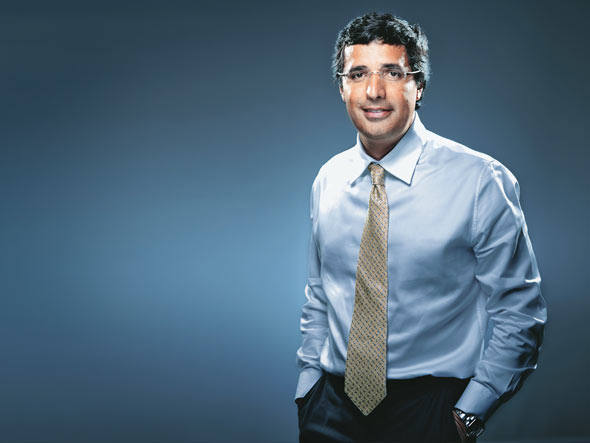
BTG Pactual buys rival Celfin Capital in Chile to build out the region: Led by the by now legendary Andre Esteves (who became a billionaire after the UBS Pactual deal) and Persio Arida (former president of the Brazil Central Bank), BTG in February 2012 acquired Celfin Capital in Chile, to move into the lucrative pension fund markets of Chile, Peru and Colombia, and to overall build out their Latin America presence.  The group combined now manages $70 billion in asset management AUM and $30 billion in wealth management assets, for a total of $100 billion. Esteves is talking about the “flow of business between the regional markets growing strongly” and his goal to be the “regional reference point”, most certainly with ambitions to move into other global regions soon.
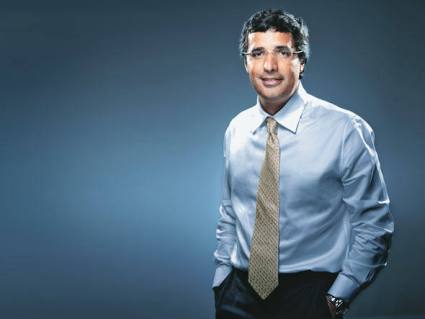
Andre Esteves - BTG Pactual

– Principal Group takes indirect ownership of Claritas in addition to JV: Principal Financial Group, a leading retirement fund manager in the US, in March 2012 bought a 60% indirect ownership of Claritas Investments as part of some $900 million in capital investments for the year. Claritas manages close to $2 billion in assets in Brazil. and gives Principal a new door into the local market and the region. Since the late 1990s Principal has had a joint venture with Banco do Brasil, distributing pension and VA products through Brasilprev. 

Luis Valdes, President Principal International

Luis Valdes, Principal International President & CEO, emphasized the strategic importance for the firm to enter the Brazilian fund industry.  Conversely, Carlos Ambrósio, managing partner at Claritas, is looking to Principal’s global investment expertise to expand capabilities and distribution.

Larry Zimpleman, Chairman, President & CEO, Principal Group

Principal Chairman & CEO Larry Zimpleman sees Brasilprev and Claritas as targeting different market segments, but “both support our goal to be a pension and long-term investment leader in Brazil.”

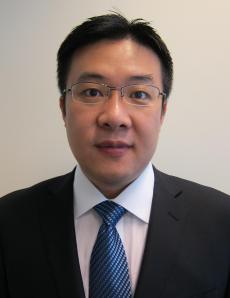
– Julius Baer buys stake in Global Portfolio Strategists (GPS) to go after Brazilian and LatAM (U)HNW investors: Swiss private bank Julius Baer in the spring/summer 2011 acquired a 30% stake in Brazilian wealth manager GPS (GPS Planejamento Financeiro and Administração de Recursos) to build out wealth management in Latin America. GPS has a staff of around 85, run by nine partners and three founding partners (José Eduardo Martins, Marco Belda and Roberto Rudge) – the deal gets JB two seats on GPS’ board.

– Credit Suisse & Hedging Griffo: After acquiring investment bank Garantia in 1998, Credit Suisse bought a majority stake in Hedging Griffo in 2006 and then acquired full control in 2011, to build out an onshore asset management and private banking business. HG is run by 70 partners, but most of the attention for the firm has gone to Luis Stuhlberger, the manager of the flagship Verde hedge fund and its offshore version, the Green fund. Stuhlberger implemented Hedging Griffo’s asset management business in 1992. HG’s multi-mercado business contributed strongly to the profitability for CS in 2011, making Brazil a key contributor for the group (and full control a costly undertaking).
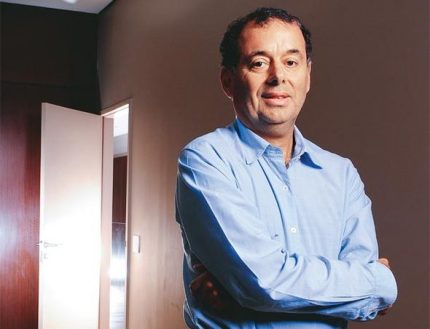
Luis Stuhlberger, CIO Hedging Griffo

Thus, away from the strategic long-term opportunities for the region’s institutional and HNW markets, we are now seeing more and more tactical opportunities for asset managers around concrete profitability projections.

And the opportunities go beyond asset management.

– Blackstone buys 40% of Patria to do more deals: The Blackstone Group in the fall of 2010 announced a partnership with Pátria, a private equity pioneer in Brazil, along with the purchase of a 40% stake.  Both firms agreed to cooperate on building their businesses in Brazil and throughout Latin  America.
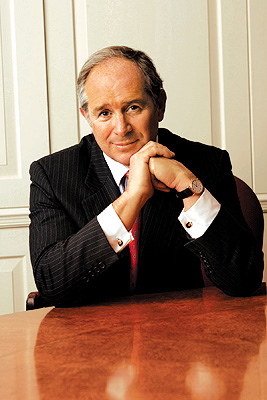
Stephen Schwarzman, Chairman/CEO Blackstone

Blackstone Chairman and CEO Stephen Schwarzman commented on their long history together. Partnering with Pátria enables Blackstone’s limited partners and advisory clients to benefit from the fast expanding business opportunities in Brazil – and from Pátria’s deep knowledge of the local market.  Focal points are financial advisory services, real estate, private equity, capital management and infrastructure.

Pátria CEO Luiz Otavio Magalhães sees the deal as one of the most significant partnerships in Brazil’s financial industry.
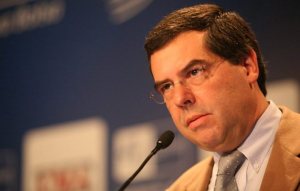
Luiz Otavio Magalhães, CEO Patria

Notably, the trend is not only for international fund managers to go into Brazil, but now also for Brazilian managers to go abroad.

– Brazil’s Safra buying Swiss Sarasin as a hub for Europe, Asia and the Middle East: Emerging market managers are buying stakes or acquiring developed market players. As the private banking industry in Switzerland has hit some bumps in the road and is likely to see consolidation, industry observers assumed that Julius Baer would be the buyer for Sarasin, having made no secret of ambitions to grow via acquisitions. Baer previously bought ING’s Swiss operations, but was not able to add those of ABN Amro. In the case of Sarasin, management resisted the Baer takeover for a variety of personal and business reasons.  Enter Brazil’s Safra Group.
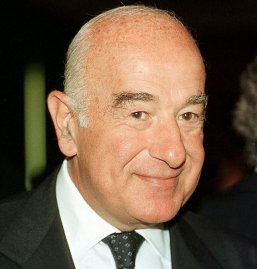
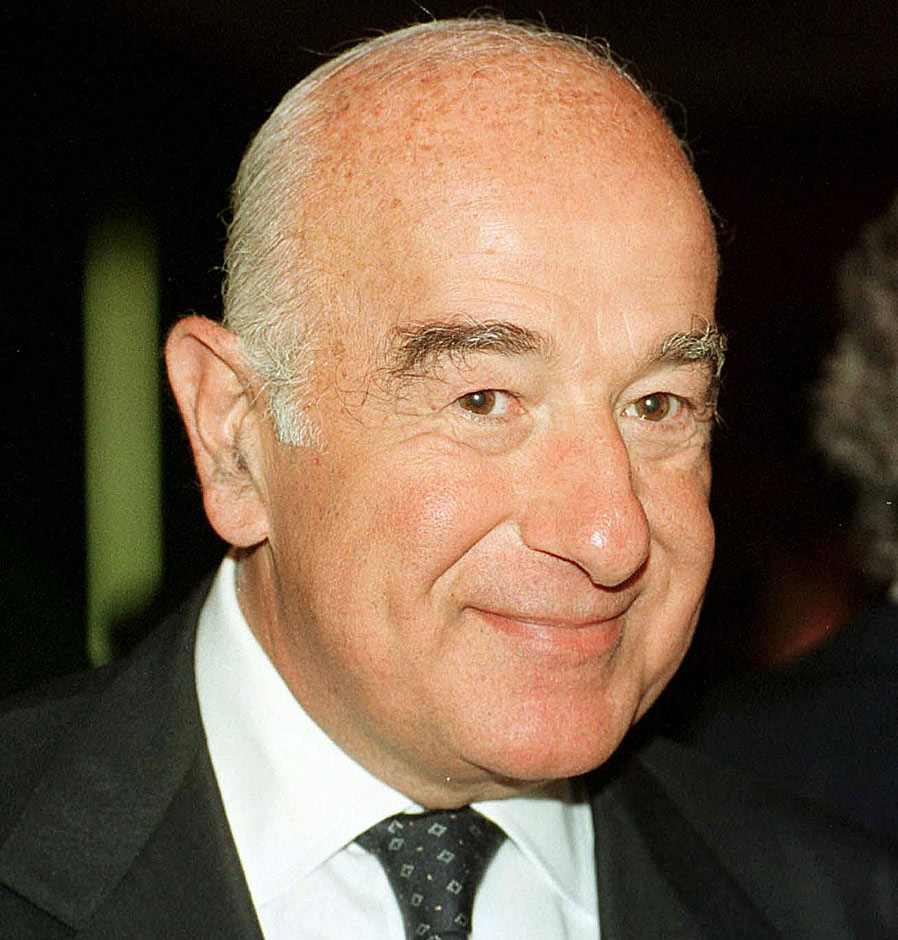
Joseph Safra, Chairman Safra Group

Safra surprised the local industry in Switzerland by agreeing to buy a majority stake for Sarasin from Rabobank for $1.1 billion to expand and link private banking in Europe, the Middle East and Asia. Sao Paulo-based Safra, having moved its headquarters there from Syria in 1952, will bring some Samba to the Bahnhofstrasse. Chairman Joseph Safra stated “the origins of Safra and Sarasin are very similar”, with “philosophies and strategies to private banking that are very much the same.”

The industry should prepare for many more emerging market players to emerge as competitors and acquirers on the world stage of asset management, led by countries like China, Brazil, and the N-11. At a recent industry conference in Sao Paulo I interviewed the leaders of some of the top Brazil asset managers on their strategies.

Some firms make the jump… others are exploring. Investment banking, mutual funds, private banking, hedge funds, private equity, Brazil locally and as a hub for the region and beyond, Brazil is becoming both a tactical and strategic opportunity for market entry, regional expansion and global interconnectivity of an ever more complex asset management industry across clients segments.

Go hard or go home.

Posted in Uncategorized | Tagged , , , , , , , , , , , , , , , , , , , , , , , , , , , , , , , , | 3 Comments

BAILA Society’s BASo ALTo performing at the Latino College Expo 2012 (NYU Kimmel Center)

BAILA Society’s apprentice team BASo ALTo this weekend performed at the 22nd Latino College Expo at NYU’s Kimmel Center – click here for a slideshow of the event.

We were honored to have BASo ALTo do a showcase of NY Salsa following an inspiring keynote speech by Dr. Pedro Noguera, NYU’s Peter L. Agnew Professor of Education, Executive Director of the Metropolitan Center for Urban Education, and co-Director of the Institute for the Study of Globalization and Education in Metropolitan Settings (IGEMS).

Dr. Pedro Noguera's keynote speech at the Latino College Expo 2012 (NYU Kimmel Center)

Dr. Pedro Noguera's keynote speech at the Latino College Expo 2012 (NYU Kimmel Center)

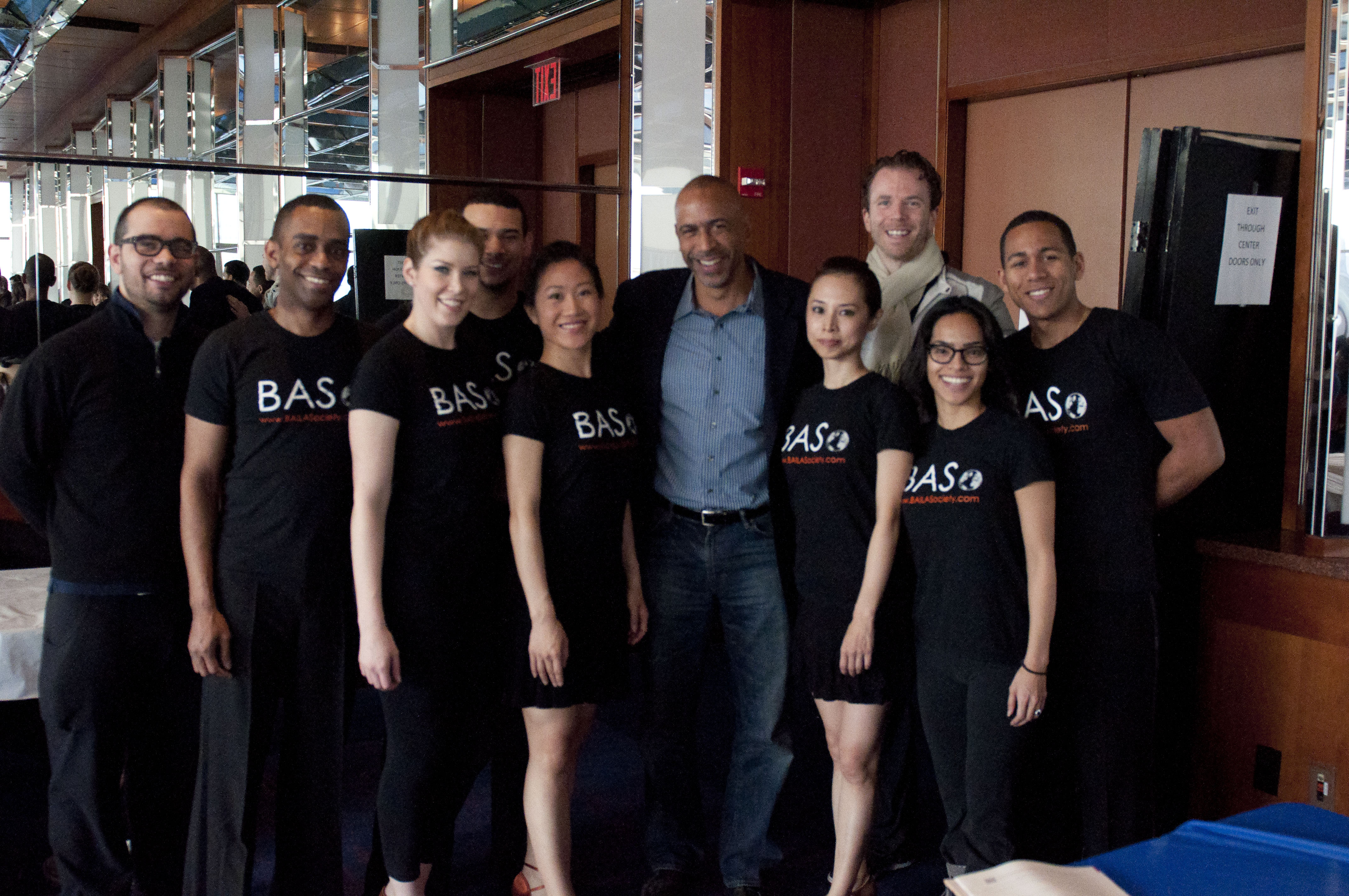
Dr. Noguera shared with the students-to-be his personal story (his parents did not graduate high school, yet he received degrees and held tenured faculty positions at Brown, Berkeley and Harvard), and how college beyond an education should provide mentorship, access to networks to be used to advance once goals, and, above all, the spark to make a change in an ever more complex and volatile world.

BAILA Society & BASo ALTo with Dr. Pedro Noguera

We then received a gracious welcome from Antonio Aponte, the Director of Educational Services at The Boys’ Club of New York, below:

The Latino College Expo has become one of the most respected educational events in New York City, made possible by the continued support of colleges, individual educators and community-based organizations. Some of the partnerships and individuals that have helped make the event a reality include NYU, the NY Knicks, Mr. James Rodriguez, and the Boys’ Club of New York.

BAILA Society and BASo ALTo with Antonio Aponte

It is a great honor for BAILA Society to be part of the Latino College Expo as part of our community and charitable outreach. In past years, we have proudly supported the Latino Commission on AIDS, Latin Diversity Month, Cancer Research, Childhood Obesity Awareness, Alzheimer Research, Craniosinostosis, and many other worthy causes. BAILA Society teaches at Peridance and Alvin Ailey. You can find out more about our work in our annual reports or at www.bailasociety.com.

Posted in Uncategorized | Tagged , , , , , , , , , , , , , , , , , , , , , , | Leave a comment

Case study: The end of one Deutsche Guggenheim deal, the beginning of another

It all started in 1997… that’s when Deutsche Bank and the Solomon R. Guggenheim Foundation opened “Deutsche Guggenheim” in Berlin, to feature modern and contemporary art.

Deutsche Guggenheim Berlin

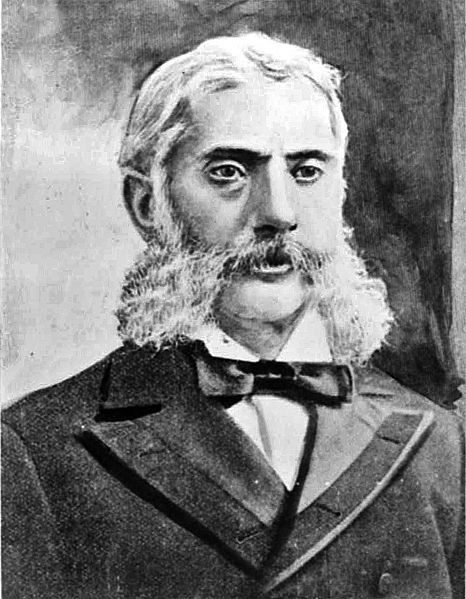
Solomon Robert, of course, one of Meyer Guggenheim’s ten children, founded the foundation in 1937 and today, in addition to the one in Berlin, it administers the Guggenheim museum in NY, the Guggenheim museum in Bilbao, and the Peggy Guggenheim Collection in Venice.

Meyer Guggenheim

2012 will mark the end of this partnership – the contract ends this year and both parties in early February announced that the museum in Berlin will close.

As one “Deutsche Guggenheim” is closing, another one is opening.

In late February 2012, Deutsche Bank announced that it is entering exclusive negotiations with NY-based private equity giant Guggenheim Partners (GP) to sell some $550 billion in AUM from its asset management business; specifically, DWS Americas, the US mutual fund arm, DB Advisors, the institutional and insurance business as well as the real estate operations (RREEF). The deal is valued in the vicinity of $3 billion.

Guggenheim Partners, of course, was founded twelve years ago by Peter Lawson-Johnson Sr, a great grandson of Meyer Guggenheim.  The firm is led by Mark Walter (CEO), Todd Boehly (President, former CSFB), Alan Schwartz (Executive Chairman, former Bear Stearns CEO), and Scott Minerd (CIO, former CSFB).

The deal is noteworthy for a number of reasons, and also highlights metatrends pointed out in our research in recent years.

Guggenheim Partners

1. The appeal of asset management & industry consolidation:

The financial services industry has suffered from numerous scandals since 2008 (Madoff, Lehman, rogue traders, et al). As a result, market uncertainties and investor anxieties have led to a trend back-to-basics, and mutual funds and asset management have moved from foster child to prodigal son (or daughter).  Low capital requirements, blockbuster cash flows and sustainability of assets furthermore accelerated consolidation in the industry, as some larger groups had to sell their asset management businesses away from their ‘core’ interests or to strengthen the balance sheet (Deutsche, Santander, et al), while others are strategically investing to build investment capabilities and distribution hubs (CSHG, Aberdeen, Safra, et al), often involving emerging markets.

The top 1% of products worldwide in the last three years collectively gathered $3 trillion in new cash contributions (as discussed in my recent book on the State of the Asset Management Industry – March 2012). Building a strong brand and a global blockbuster product can change the game for any company.

State of the Global Asset Management Industry - March 2012

2. Multi-convergence in the asset management industry:  

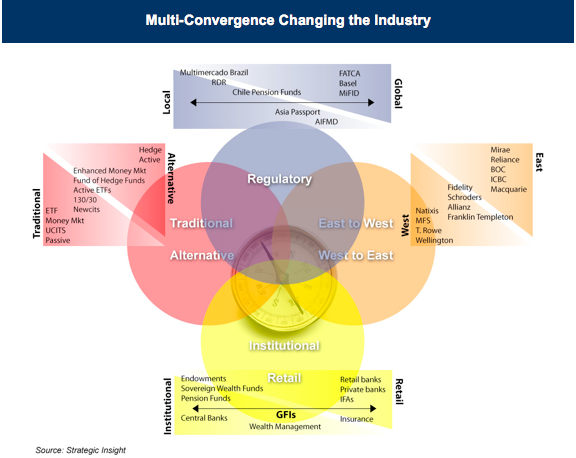
We have seen blurry lines of demarcation between the retail and institutional businesses since the crisis, especially inasmuch as brand is concerned.  For instance, PIMCO generated institutional business using Bill Gross‘ retail brand, and now is trying to re-engineer the brand around institutional and risk processes while building a retail presence after leaving the Allianz network. Global financial institutions worldwide are using institutional methodologies and selection criteria while ultimately selling solutions to mass affluent and retail networks (e.g. high yield in Japan, or Asia themes by US managers in Chile).  GP has significant expertise on the institutional side of the business, and with an acquisition could add $550 billion in assets under management to instantly become a “Goliath brand” and strategic partner for GFIs and others.

More than 30 parties were interested in those assets, but GP prevailed. The deal, which could go through in the first quarter of 2012, would give GP its first presence on the ground in Australia.  Going global.

Multi-Convergence in the Asset Management Industry

3. The Globalization of the investment management industry and West-to-East vs. East-to-West: 

Guggenheim Partners of late has focused on becoming more competitive globally, as borders for the industry are becoming less relevant and blockbusters are created worldwide. In mid-March 2012, Henry Silverman, the former chief operating officer of Apollo Global Management, will join GP to advise on expansion as vice chairman of investment management based in New York.

Guggenheim Capital LLC, the majority owner of Guggenheim Partners, has raised money from outside investors, including Sammons Enterprises, a Texas-based company with diversified investment interests.

Last summer, Singapore’s K1 invested $100 million in preferred units and some 11 million detachable warrants to acquire common units in Guggenheim Capital LLC, for GP to expand globally. The preferred units deliver a 7% annual dividend and are senior to all common equity. One of the largest acquisitions for the firm, K1 foresees complementary benefits  including co-investment, strategic JVs, and access to capital.

K1’s chairman and CEO, of course, is Steven Jay Green, former US ambassador to Singapore and founder of PE firms Greenstreet Partners and Greenstreet Real Estate Partners.  As part of the deal, Green will become member of Guggenheim’s executive committee.  K1 had a 2011 EBITDA of close to 40 million on some $75 million in revenues. The management team includes Choo Chiau Beng, non-resident ambassador to Brazil (another M&A hotspot), Yong Pung Ho, Singapore’s former chief justice, and Jeffrey Alan Safchik.

As we have seen in recent months, the M&A scene is heating up worldwide.  Whether it is Sao Paulo-based Safra buying Swiss Sarasin to build Europe, Middle East, and Asia HNW distribution, Aberdeen buying Nationwide in the US, Credit Suisse buying Hedging Griffo, or Principal buying Claritas, the importance to build a global network to leverage investment and distribution capabilities in an age of blockbusters and multi-convergence will be paramount.

Guggenheim definitely has the brand equity and people to build a Goliath firm.  Scott Minerd in his recent market perspectives has focused on “winning the war in Europe” (GP is an advisor to Greece), and “the triumph of optimism”.

Guggenheim Partners - Perspectives

Welcome to 2012, go hard or go home.

Posted in Uncategorized | Tagged , , , , , , , , , , , , , , , , , , , , , , , , , , , , | 1 Comment

BAILA Society at Alvin Ailey, Peridance & Eifman at NY City Center

Two things stood out this past week on the dance front:

Last week, BAILA Society started teaching at Alvin Ailey as part of the Extension.  To be part of the faculty of such an iconic dance company and to be teaching there is an enormous honor for all of us at BAILA Society and another testament to the unifying nature of dance.

Alvin Ailey Faculty - DSE

For the last couple of years we had the great pleasure of working with Igal Perry and Peridance/Capezio as a strategic partner – we teach open and company classes at Peridance and it is a wonderful home and inspiring environment to be part of.

Igal Perry has been a pioneer of bringing all dances together under one roof and I am truly blessed to be on the board of his Peridance Contemporary Dance Company. A few years ago we did a series of interviews highlighting Igal’s philosophy, dance life and overall vision.

Peridance Contemporary Dance Company

Today I had the luck to get tickets for the last NY City Center show of Boris Eifman’s new choreography, Rodin.  These Russian dancers are insanely good and Eifman is a choreography genius.  Rarely has dance moved me this much.  In his foreword to the piece, Eifman wrote: “The life and love of Rodin and Claudel is an amazing story of two artists in an incredibly dramatic alliance in which everything interlaced – passion, hatred, artistic jealousy.”  His whole company was outstanding, but Lyubov Andreyeva and Oleg Gabyshev were sublime as Camille and Rodin.

Boris Eifman, "Rodin"

Posted in Uncategorized | Tagged , , , , , , , , , , , , , , , , , , , , , , | Leave a comment

New Strategic Insight Study: State of the Global Asset Management Industry – 2011 Review, 2012 Outlook


New Strategic Insight Study: STATE OF THE GLOBAL
FUND INDUSTRY – 2011 REVIEW, 2012 OUTLOOK


State of the Industry - Vol. 2

New York – March 7, 2012 – The second volume of Strategic Insight’s State of the Industry report provides a global review of 2011 and an outlook for 2012, and also focuses on winning strategies, leading firms and standout campaigns that enabled blockbuster firms to sustain cash flows in the second half of 2011, at a time when the industry globally was impacted by the next act of the European debt crisis, market volatility (in August), regulatory uncertainty, limited net retail contributions and macro-political stumbling blocks.  Daniel Enskat, Head of Global Consulting for Strategic Insight and author of the report, on the major themes and data points discussed in the study:

  • “Flow compression for the global fund industry in 2011: Globally, net cash contributions to long-term mutual funds totaled $200 billion for 2011, down 80% from $1 trillion in both 2010 and 2009.  Net inflows in the US, Asia, and Latin America stood in contrast to outflows from Europe.
  • Blockbuster phenomenon: the top 1% of products take in $1 trillion in 2011: Despite the aggregate industry flow compression, the top 1% of products was able to pull in $1 trillion in new money last year, with an average of $1.5 billion in cash flows per fund.  The 1% within the 1% were the ultimate winners, with $11.5 billion in new cash per fund.
  • The 1% come in all shapes and sizes: blockbusters included small and large firms, different global regions and a variety of investment themes.  The common denominator for all of them was the right mix of investment performance, client service, a strong brand and organizational stability.
  • An equity centric global fund industry refocuses in 2012: While fixed income has dominated flow statistics in recent years, the fund industry from an asset perspective evolves around equities:  Equity/mixed funds account for 51% of all global fund assets.  January 2012 flows to equities are a promising start.
  • The industry is moving towards investment solutions and ‘bridges’: Themes and simplicity still dominate the product landscape, but institutions and distributors around the world are gradually shifting towards ‘bridge’ products.  Globally, investment solutions overall are approaching $4 trillion in assets, with $110 billion in 2011 cash flows.  The top three 2011 cash flow funds were all US-based global asset allocation products (PIMCO All Asset, First Eagle Global, and Permanent Portfolio), with each over $5 billion in cash flows.
  • Alternatives (again) on the rise: After a move back-to-basics post 2008, alternative and absolute return products have since accelerated exponentially, now approaching 7.5% of global fund assets.  In 2011 alternative funds combined gathered $100 billion in net new money.  Top funds were: Standard Life Global Absolute Return Strategies ($3.7 billion), Newton Real Return ($3.5 billion), Van Eck Market Vector Gold Miners ETF & ZKB Gold ETF ($3 billion each), iShares Gold Trust ($2.8 billion).
  • Three meta-trends – future asset class/investment category demand, regional flow potential (developed vs. emerging) and concentration of leadership via selected blockbuster products – will be part of the conceptual framework for fund managers as they are mapping out brand positioning and growth strategies for the coming years from a flow perspective.
  • The best-selling investment categories in 2011 were global bond ($63 billion), US short-term bond funds ($61 billion), international/global equities ($57 billion), US corporate fixed income ($39 billion), and real estate ($30 billion).
  • Multi-convergence in the asset management industry:  We see blurring lines of demarcation between traditional & alternative investment approaches; West & East and East & West; retail & institutional distribution, and a more complex global and local regulatory framework.  In combination, these metatrends represent an inflection point for the industry from an era of self-directed performance driven investing seen as fun, to an era of advisory-based investing around managing complexity and volatility while preserving capital and providing stability and income.
  • Guidance, advice and protection for 2012:  Our proprietary surveys show that now more than ever investors seek guidance, advice and protection, with leading concerns in 2012 around portfolio diversification, volatility, income and inflation.  For 2012, we see a recovery of long-term flows; a gradual pick up of equity demand, a comeback of retail investors; continued opportunities for independent asset managers; and sustained flows to alternatives and investment solution; all of which concentrated to the 1%.”

For more information or to get a copy of the report, please contact Brittany Keppel (bkeppel@sionline.com)

Bryan Liu, Senior Research Analyst (HK)

Lise Carpenter, Senior Research Analyst (HK)

***

Strategic Insight, founded in 1986, is a leading research firm for the mutual fund and wealth management industry, providing clients with in-depth studies, consultation, and electronic decision support systems. Strategic Insight assists more than 250 firms worldwide, including the largest U.S. mutual fund companies. Visit us at www.SIonline.com. SI’s parent, Asset International, is a privately held provider of information and technology to global pension funds, asset managers, financial advisers, banking service providers, and other financial institutions in the private and public sector. The company has offices in New York, Hong Kong, London, Melbourne and Stamford, CT. For additional information, visit www.AssetInternational.com.

Posted in asia, beauty, black swans, Brand, Brazil, cash flows, Chile, consulting, distribution, EFAMA, Enskat, information delivery, institutions | Tagged , , , , , , , , , , , , , , , , , , , , , , , , , , , , , , , , , , , , , , , , | 2 Comments

2011 Global Asset Management Cash Flow Review & Outlook for 2012 – The 1%

FOR IMMEDIATE RELEASE

Daniel Enskat, Head of Global Consulting, Senior Managing Director

+1 212 217 6859, daniel@sionline.com   

2011 GLOBAL MUTUAL FUND FLOWS DECREASE BY 80% TO $200 BILLION BUT THE 1% OF TOP PRODUCTS COLLECT $1 TRILLION IN NEW CASH; US AND ASIA WITH NET INFLOWS, EUROPE IN REDEMPTIONS

New York, Hong Kong and London – February 27, 2011 – Net cash contributions to long-term mutual funds around the world came in at around $200 billion for 2011, down from almost $1 trillion in both 2010 and 2009, according to a forthcoming research report by Strategic Insight, entitled “the State of the Global Mutual Fund Industry”.  Net inflows in the US, Asia, and Latin America stood in contrast to outflows from Europe.

“Despite the aggregate industry flow compression, the top 1% of products in the industry were able to pull in $1 trillion in net new money last year, virtually unchanged from prior years – a continuation of the ‘winner takes all’ and blockbuster phenomena the industry has seen of late”, stated Daniel Enskat, Head of Global Consulting for Strategic Insight and author of the report.

Said Enskat: “Notably, the 1% of blockbuster managers and products included small and large firms, different global regions and a variety of investment themes.  The common denominator for all of them was the right mix of investment performance, client service, a strong brand and organizational stability”.

“Strategic Insight since 2008 has conducted over one thousand interviews with global asset holders around their key selection criteria and manager preferences. The second volume of Strategic Insight’s State of the Industry report (SOTI) focuses on winning strategies, leading firms and standout campaigns that enabled those blockbuster firms to sustain cash flows in the second half of 2011, at a time when the industry globally was impacted by the next act of the European debt crisis, market volatility (in August), regulatory uncertainty, limited net retail contributions and macro-political stumbling blocks.”

A few of the key themes and data points discussed in the report:

  • An equity centric global fund industry refocuses in 2012: While fixed income has dominated flow statistics in recent years, the fund industry from an asset perspective evolves around equities. Globally, 42% of the over $30 trillion in total assets are held in equity funds, with another 9% in mixed products, bringing the total for equity/mixed funds to 51% of all global fund assets.
  • The industry is moving towards investment solutions and ‘bridges’: “Themes and simplicity still dominate the product landscape, but institutions and distributors around the world are gradually shifting towards ‘bridge’ products, leading towards investment solutions and absolute return themes, albeit with geographical nuances. The various forms of investment solutions and wrappers – among them lifecycle, multi-manager, fund-of-funds, multi-asset, and other wrappers – overall are approaching $4 trillion in assets, with $110 billion in 2011 cash flows,” notes Enskat.  The top three funds were all US-based global asset allocation products (PIMCO All Asset, First Eagle Global, and Permanent Portfolio), with each over $5 billion in 2011 cash flows.
  • Alternatives on the rise: After a move back to basics after 2008, alternative and absolute return products have accelerated exponentially since then, now approaching 7.5% of global fund assets. Alternative funds in 2011 combined gathered $100 billion in net cash flows, with top funds Standard Life Global Absolute Return Strategies ($3.7 billion), Newton Real Return ($3.5 billion), Van Eck Market Vector Gold Miners ETF & ZKB Gold ETF ($3 billion each), iShares Gold Trust ($2.8 billion).
  • “From a flow perspective, three meta-trends – future asset class/investment category demand, regional flow potential (developed vs. emerging) and concentration of leadership via selected blockbuster products – will be part of the conceptual framework for fund managers as they are mapping out brand positioning and growth strategies for the coming years,” added Enskat.
  • The best selling investment categories in 2011 were global bond ($63 billion), US short-term bond funds ($61 billion), international/global equities ($57 billion), US corporate fixed income ($39 billion), and real estate ($30 billion).  And among the top five 2012 focus areas for institutions and global distributors based on proprietary Strategic Insight survey work are investment solutions, absolute return, client service, thought leadership and better digital information delivery.
  • The Winner-Takes-All:  2011 sharply delineated outcomes for fund managers. Blockbuster cash flow firms demonstrated thought leadership, tailored information delivery, simplicity in product positioning and clarity of investment process, and the top 1% of products combined took in almost $1 trillion in new money.  Among the top global cash flow blockbusters in 2011: Vanguard Total International Stock Index, Templeton Global Bond, iShares DAX, Double Line Total Return, and DaiwaSB Short-Term AU Bond.

For more information on this report, please visit: www.strategicinsightglobal.com 

***

Strategic Insight, founded in 1986, is a leading research firm for the mutual fund and wealth management industry, providing clients with in-depth studies, consultation, and electronic decision support systems. Strategic Insight assists more than 250 firms worldwide, including the largest U.S. mutual fund companies. Visit us at www.SIonline.com. SI’s parent, Asset International, is a privately held provider of information and technology to global pension funds, asset managers, financial advisers, banking service providers, and other financial institutions in the private and public sector. The company has offices in New York, Hong Kong, London, Melbourne and Stamford, CT. For additional information, visit www.AssetInternational.com.

Posted in beauty, black swans, Brand, Brazil, cash flows, China, consulting, distribution | Tagged , , , , , , , , , , , , , , , , , , , | Leave a comment

Go Hard or Go Home: $150 billion in 2011 fund industry cash flows vs. $725 billion to top 0.5% of products

The global asset management industry collected $150 billion in long-term net cash flows last year – down from about $1 trillion in both 2010 and 2009.

Yet, despite the aggregate compression of long-term cash contributions, the top 0.5% of blockbuster products in 2011 collected $725 billion in new money – almost the same as in 2010.

Call it the blockbuster phenomenon. More and more money going to fewer managers and fewer products.

This winner takes all approach worldwide makes it ever more important to

a) produce a global blockbuster

b) get a decent operating margin on that blockbuster (i.e. rather less cash flows but higher profitability) and

c) protect that blockbuster and the business from concentration risk.

#GlobalAssetManagementSuccess2012.

Posted in Uncategorized | Tagged , , , , , , , , , , , , , | Leave a comment

Judging the World Latin Dance Cup 2011 in Las Vegas

On December 14-17, 2011, Ahtoy and I had the honor of judging Albert Torres’ World Latin Dance Cup in Las Vegas, alongside dance legend and head judge Billy Fajardo, multi-World Champion across disciplines and a former ABT dancer with Mikhail Baryshnikov, Tito Ortos from Puerto Rico, choreographer for Gilberto Santa Rosa and Victor Manuelle, as well as a panel of other renowned judges from around the world.

WLDC 2011 Judges

After judging multiple national championships earlier in the year, one of our favorites having been the Colombia championship, it felt like a family reunion, with dancers from over 40 countries competing in 20 divisions.

We got into Vegas Tuesday evening and made the best of the night by immediately hitting the pavement for a dinner at Wynn’s Stratta, followed by a spectacular show at the Wynn, Le Reve. Effectively the show is entirely in and under water, but includes dancing, acrobatics, choreography and much more. The dancers and acrobats are in incredible shape and profoundly charismatic, setting the stage for what was about to come in the next four days of judging the World Latin Dance Cup at the legendary Tropicana.

On Wednesday, we started out with a final qualifier and the level of talent was outstanding.

http://www.ustream.tv/embed/2170655

Thursday and Friday featured the semi-finals, where we had to choose five finalists for each division out of over twenty competitors and teams for most of the division – i.e. for 75% of the talent that had traveled thousands of miles to compete in Vegas the dream to compete in the finals ended after a few minutes on stage.

The most competitive divisions, such as on1, on2, cabaret, juniors and teams were especially intense for everyone involved – the audience (in Vegas and around the world), the competitors, and the judges. In many cases only a tenth of a point separated the fifth from the sixth place and emotions ran high on both nights.

Luckily, during the day I had time to hit the gym and work up a sweat before sitting on my chair for 4-5 hours each night to judge. Also, given that some of the best US and international chefs have restaurants in Vegas (Gagnaire, Babbo, Lagasse, Keller, etc), we had time to sample some of the best food in the country each day for lunch. La vita e bella.

Tuesday night we started off with Stratta at the Wynn. Wednesday we opted for Delmonico at the Venetian, since Bouchon was closed for renovations until the weekend, Thursday we checked out Olives at the Bellaggio, Friday the Canyon Ranch Café with its organic and healthy cuisine, and on Saturday we had a delicious brunch and oysters at Bouchon. That experience prompted a replay on Sunday before heading back to New York.

But I digress.

The hardest part of being a judge was to not talk to any of my dancer friends throughout the weekend to remain neutral and fair. Still, once Friday’s final scores were released we had to lock ourselves up to at least delay the avalanche of questions from dancers that a) did not make it, b) made it but wanted tips on how to score higher and c) those that thought they should have made it but didn’t.

Saturday.

Due to the numerous divisions we started the competition an hour earlier on Saturday. Host Albert Torres announced that a few hundred thousand viewers had set a new record for the event in terms of global coverage and buzz, and at 5pm we were off to a highly emotional night filled with drama, tension, powerful dancing and fierce competition.

A few former world champions had barely made it into the finals, while some newcomers had come out of nowhere (both geographically speaking and in terms of their abilities), thus emotions ran high from the first minute.

Adding fuel to the fire was the fact that a few top competitors were too excited during their piece and ended up violating the rules. For most non-cabaret divisions, a key rule is that either no more than three tricks/lifts are permitted or that the showcase has to be non-acrobatic, meaning that at no time is it allowed for both feet to leave the floor.

Early on in one of the divisions a top competitor couple put too much energy into one such move and her feet left the ground for a split second. As a result, the couple did not make it into the top three.

Many of the shows already early on had the audience on their feet. By the time the most competitive divisions came around, the air in the ballroom was so thick with excitement and nervous energy that one could cut it with a knife. Bachata, on1, on2, cabaret couples, the junior division, cha cha cha and the team and same sex divisions ended up becoming nailbiters.

As we entered the results backstage and calculated the scores it became clear that for all those categories the differential between winning and not making it into the top three was less than 1%. The difference between first and second place for some divisions was less than 0.1%, and in some cases less than 0.02%. The competitors intuitively knew that and each minute of us being backstage calculating must have felt like years to them.

Finally around midnight we made it back into the ballroom to announce the final scores to the audience and the world to see.

Here are the final scores and videos for the winning routines.

For me and all of us, it was a great privilege and honor to judge the World Latin Dance Cup and to help usher in a new generation of world class performers that will represent the beautiful art form of Latin dance and Salsa around the world in 2012 and beyond. This year clearly belonged to Mexico, which in recent years has established itself as a powerhouse generator of astounding talent.

Personally for me it was a pleasure to see Paulina Posadas Dagio win the high stakes on2 division with her partner David Zepeda. All nine judges gave them top scores far ahead of the other finalists, making it the only unanimous decision of the night. Both of them are incredible performers, beautiful dancers, and humble people that will inspire audiences around the world. We had the pleasure of having Paulina with us and our company in New York in the studio and on the Bailando Por Una Causa stage this summer and I can think of no better role model for dancers today as Paulina.

Posted in Uncategorized | Tagged , , , , , , , , , , , , , , , , , , , , , , , , , , | Leave a comment