
Fashion has Anna Wintour, Hollywood has Meryl Streep, Germany has Angela Merkel, PepsiCo has Indra Nooyi.

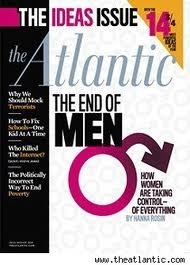
With a new bestselling book out, “The end of men – the rise of women”, how pervasive is female leadership in the asset management industry, and what has the effect been?

Of the top ten asset management firms in the U.S., only one is led by a female CEO—J.P. Morgan Asset Management, with Mary Callahan Erdoes at the helm. Four companies on the list have women among their key executives—Fidelity Investments, J.P. Morgan Asset Management, BlackRock, and Goldman Sachs Asset Management. In spite of earning 54% of all undergraduate and graduate accounting degrees, women hold only 18% of executive officer and board director positions at finance and insurance companies, alongside a meager 8.7 % of chief financial officer posts in America.

Why does this matter?
Egalitarian questions of gender equality aside, research suggests that this lack of diversity may actually be detrimental to the bottom line.
Also, from an investment perspective, we are seeing phenomena like “Mrs. Watanabe”—a designation for Japanese housewife speculators powerful enough to shape markets, especially in foreign exchange. The transfer of financial influence is far-reaching, as even women in Saudi Arabia are becoming more empowered in dealing with their wealth. The Middle East Economic Digest estimated that Gulf women controlled assets of approximately USD 385 billion in 2011, as women continue to control an increasing number of brokerage accounts and family-run businesses—even if only as silent partners.
Kathy Matsui of Goldman Sachs—ranked as a top equity strategist in Japan by Institutional Investor, coined the term “womenomics” in a foundational report a little over a decade ago. Her research concluded that the companies with the highest proportion of female employees on the Japanese stock exchange performed nearly 50 percent better than those with the lowest.

Her findings were complimented by Catalyst and BMO Financial Group in a 2004 study focused on the U.S. Catalyst examined 353 out of 500 of America’s largest companies from 1996-2000, and found that, on average, companies with the highest percentage of women among their top officers had an equity return that was 35% percent higher than those with fewest high-level women.
Shareholder total return was 34% higher for companies with the most executive women.
Of course, results in one country, region, or industry, are not always portable. However, awareness of these findings is essential because lack of gender diversity ultimately signals a company’s inability to mirror its clients.
As women now earn the vast majority of post-graduate degrees, not acknowledging their growing purchasing power will become an increasingly expensive mistake. Higher performance is not attributed to the idea that female executives are somehow more capable or intelligent than their male counterparts (although they might be). Rather, companies innovative enough to promote women are also more likely to be ahead of the curve, and thus better able to seize new business opportunities. Or, as Daniel Pink points out in “a whole new mind”: the MFA is the new MBA.
As I have discussed in prior blogs, the trend of a new era of right brain dominated business success around multi-tasking, holistic solutions and non-linear thinking is likely to give women a competitive advantage.
Maybe not the end of men just yet, but we better get our act together.
I invite you to follow me on twitter @danenskat
(c) Enskat Associates 2012

 Warren Enskat Group
Pingback: Top 25 paid women in business – finance leads the way | Enskat & Associates
Pingback: 4 hour work week? Balancing productivity perceptions: leadership, google, outliers, and Gangnam style work life balance | Enskat & Associates